The Architecture of the Shore
In the nineteenth century, naturalists often spoke of the shoreline as a borderland, a place where the rules of the earth and the laws of the deep collide in a perpetual, foaming negotiation. It is a messy boundary. Nothing there stays fixed for long. We tend to view the world through the lens of our own scale, assuming that the drama of existence belongs only to those who walk upright or build in stone. Yet, beneath the reach of the tide, there is a frantic, rhythmic industry that pays no mind to our human timelines. A creature moving across the wet sand is not merely traversing a beach; it is navigating a shifting map that is erased and redrawn twice a day. There is a profound, quiet dignity in such persistence—the act of claiming a small, temporary territory against the inevitable return of the salt water. Does the sand remember the weight of a footfall, or does it simply wait for the next wave to smooth the slate clean?
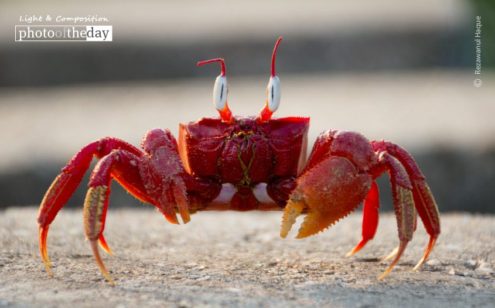
Rezawanul Haque has captured this fleeting, rhythmic dance in his work titled The Crab That Played with the Sea. It serves as a gentle reminder that even the smallest lives leave a mark on the vastness of the coast. Does this tiny traveler seem to you like a master of its own domain?