The Architecture of Silence
There is a specific weight to the air after the sun has retreated, a cooling of the world that seems to invite a different kind of listening. In the domestic sphere, we often fill this time with the clatter of dishes or the low hum of a radio, desperate to keep the encroaching shadows at bay. Yet, there are structures built specifically to hold that silence, to act as vessels for the quietude that follows the day’s labor. We build these monuments to reach toward something unseen, stacking stone upon stone as if height alone could bridge the gap between the earth and the infinite. It is a curious human impulse, this desire to create a permanent home for a fleeting feeling. We want to believe that if we build something grand enough, something enduring enough, the peace we find in the twilight will finally stay, anchored to the ground by minarets and domes. But does the stone hold the silence, or does the silence simply pass through the stone, leaving us to wonder what remains when the lights eventually fade?
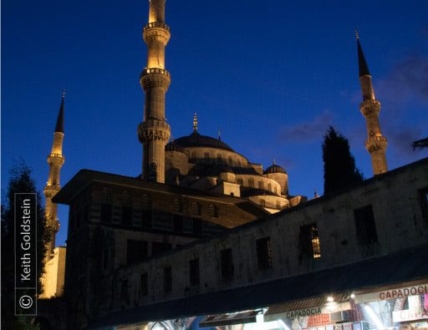
Keith Goldstein has captured this profound stillness in his image titled Blue Mosque. He invites us to stand before a monument that has witnessed centuries of such evenings, asking us to consider what it means to build a sanctuary for the soul. Does the weight of history make the silence feel any heavier?