The Edge of the Wild
We often speak of the city as a closed system, a fortress of concrete and glass designed to keep the wild at bay. Yet, the boundary between the built environment and the untamed is far more porous than our maps suggest. In the margins of our settlements, where the infrastructure of human life thins out, there exists a different kind of geography—one defined not by property lines or zoning laws, but by the ancient, rhythmic movements of those who do not recognize our borders. When we push into these spaces, we are merely guests in a territory that has its own complex social order, one that predates our arrival and will likely outlast our structures. We build walls to define our presence, but in doing so, we often forget that we are only ever occupying a small, temporary slice of a much larger, living map. Who are we to claim the landscape, and what happens to our sense of ownership when we realize we are not the only ones who call this place home?
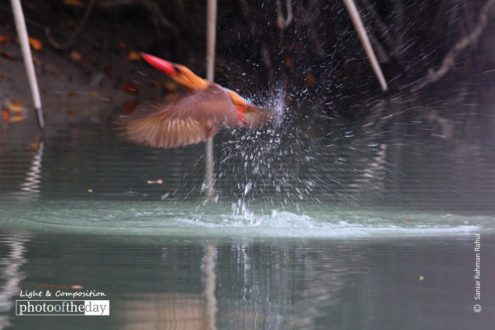
Saniar Rahman Rahul has captured this delicate intersection in his work titled Brown-winged Kingfisher. It serves as a quiet reminder of the life that persists just beyond the reach of our urban sprawl. Does this image change how you view the spaces where our world ends and the wild begins?