Delayed by Ernest Kustiadihardjo
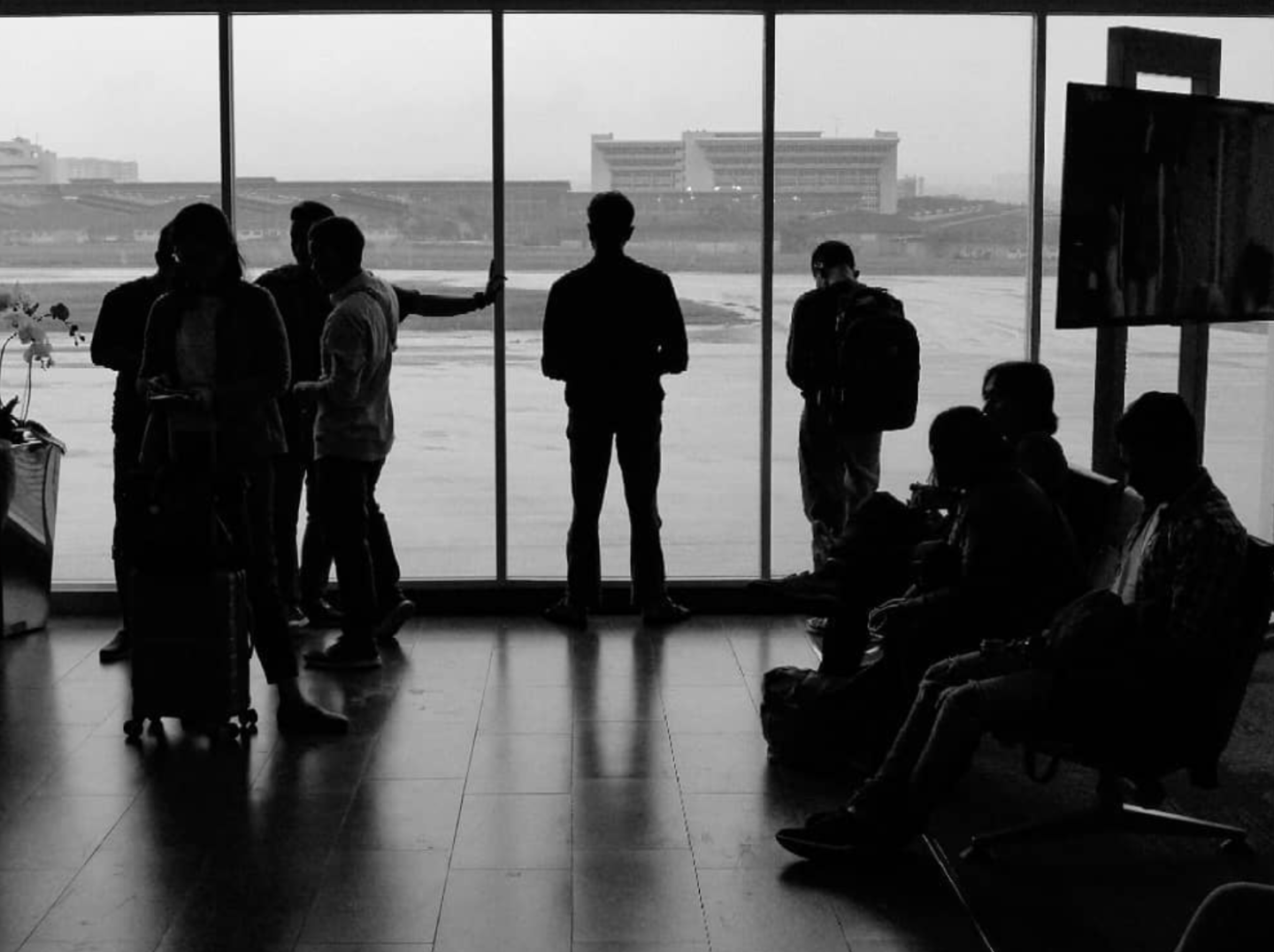
In this evocative capture, a solitary figure stands motionless within a bustling terminal, his back turned to the lens as he gazes toward the runway. The juxtaposition of the man’s stillness against the frantic movement of passing travelers creates a poignant narrative of anticipation and delay. Soft, natural light filtering through the terminal windows highlights the subject's quiet contemplation, grounding the scene in a moment of profound introspection. This image is award-worthy for its masterful use of negative space and its ability to transform a mundane travel delay into a universal study of human patience and solitude.
Ernest Kustiadihardjo
Based in Bandung, Ernest Kustiadihardjo is a dedicated photographer celebrated for his ability to distill complex emotions into striking visual narratives. His work is defined by a keen mastery of lighting and composition, allowing him to elevate both everyday scenes and extraordinary landscapes into compelling stories. Through a continuous exploration of photographic techniques, he captures the subtle beauty of the world, earning him significant recognition within the international photography community for his evocative and thoughtful approach to the craft.
Resonance Score Breakdown
Transparency Note: The resonance score (0.9/20) is calculated based on social engagement metrics collected before the award announcement.
Expert Photography Reviews · 3
The Weight of Waiting
The clock does not move. Only the hands move. We stand in the center of the rush.
Read the reflection →The Architecture of Waiting
Transit hubs are the great equalizers of the modern city, yet they are rarely designed for the human experience of time. We build these spaces for throughput, for the rapid movement of bodies from one point of production to another.
Read the reflection →Reviews & Comments
Share your thoughts about this award-winning photograph. Your reviews contribute to the community engagement score.
The terminal’s frantic blur isn’t movement; it’s a distraction from the void. Kustiadihardjo’s subject doesn’t wait for a plane, but for the silence that only deep shadow provides. I’ve felt that hollow ache in transit, where the light hits the floor like a cold judgment. It’s a brave refusal to engage with the noise. When he turns his back, he isn’t just looking away—he’s choosing the darkness where the real thinking happens. It’s haunting.
The frame resolves into a rigid grid, anchored by the vertical axis of the terminal pillar. Kustiadihardjo places the subject at the intersection of the lower-left quadrant, creating a perfect 1:3 ratio against the expansive, blurred motion of the crowd. It’s a brilliant spatial equation. The geometry of the window frames forces the eye toward the runway, locking the man in a static vector. I’m genuinely moved by how the math makes his solitude feel so absolute.
The frame holds its breath. A blur of motion streaks past, but the man stays anchored, a fixed point in a frantic edit. It’s a masterclass in stillness. I’ve spent hours in terminals just like this, and I can feel the weight of his wait in my own bones. The light hits his shoulders, turning a mundane delay into a cinematic beat. The cut would’ve been a mistake; this is the frame the editor keeps.