Not Reading Poetry by Leanne Lindsay
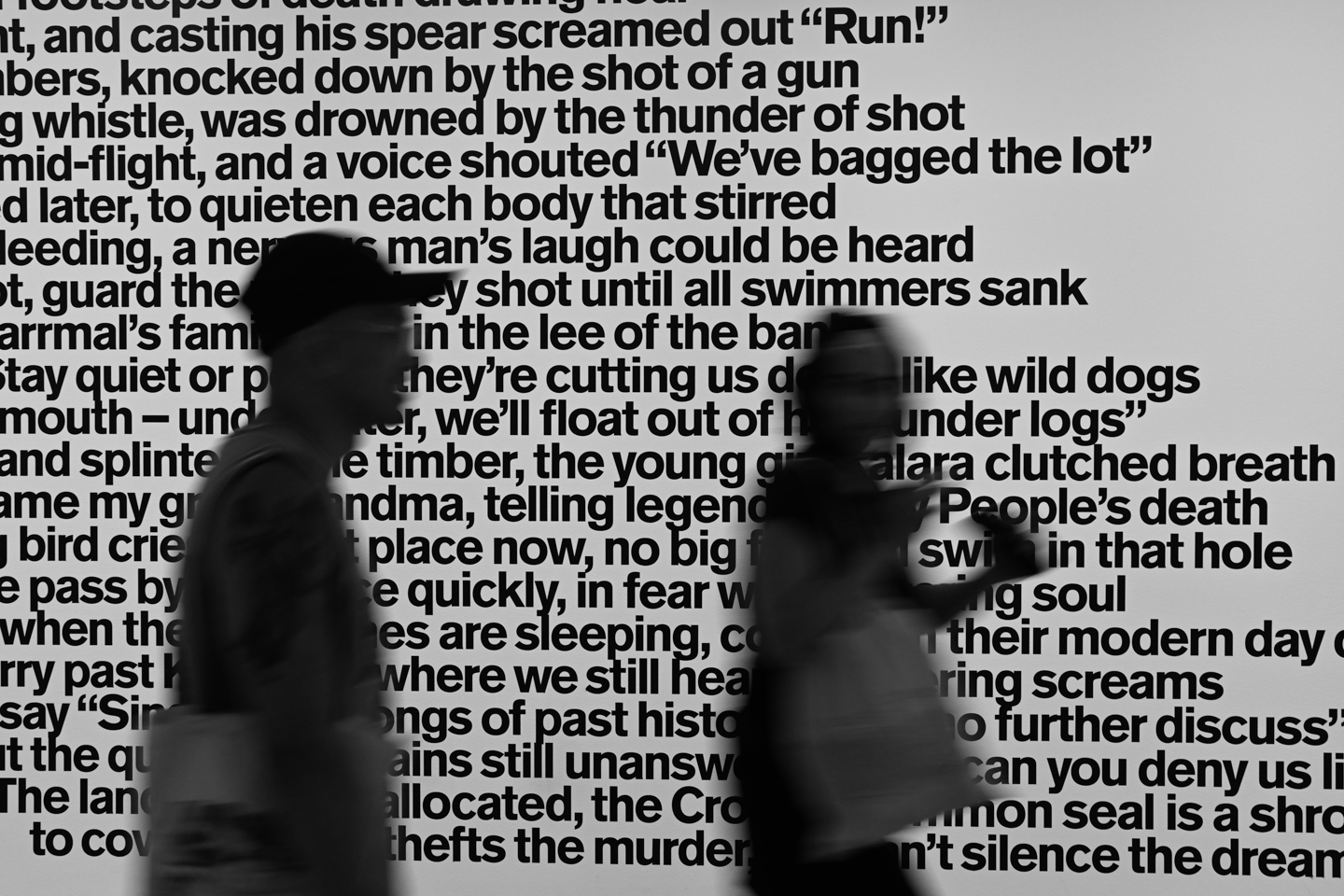
Seeking to capture the dynamic intersection of art and human movement, the photographer positioned herself within Sydney’s Museum of Contemporary Art. By intentionally selecting a slower shutter speed, she transformed the static installation into a sharp anchor point while rendering the passing pedestrians as ethereal blurs. This creative decision highlights the contrast between the permanence of art and the fleeting nature of the viewer's experience. The resulting image is a masterclass in patience and pre-visualization, successfully executing a conceptual vision that elevates a simple street scene into a compelling narrative of urban indifference and artistic presence.
Leanne Lindsay
Born in Adelaide in 1962, Leanne Lindsay relocated to Sydney during her youth, where she eventually rediscovered a dormant passion for photography in her late fifties. Though she specializes in family and newborn portraiture, her work frequently explores the structural beauty of architecture and the expansive serenity of landscapes. Now based in Sydney, Lindsay brings a renewed sense of wonder and technical precision to her craft, capturing the quiet, fleeting moments of the world around her.
Resonance Score Breakdown
Transparency Note: The resonance score (7.2/20) is calculated based on social engagement metrics collected before the award announcement.
Expert Photography Reviews · 5
The Ghost in the Gallery
To whoever left this letter on my desk: I have been thinking about how we move through the world as if we are the only ones truly awake. We walk past statues, past paintings, past the quiet weight of history, all while our own lives are rushing toward some unseen exit.
Read the reflection →The Blur of Passing Through
There was a blue wool coat my mother wore every winter for a decade. It had a specific weight, a scent of cedar and cold air, and a button that always hung by a single, fraying thread.
Read the reflection →Reviews & Comments
Share your thoughts about this award-winning photograph. Your reviews contribute to the community engagement score.
We look at this face, anchored in the stillness of the museum, while the world blurs into ghosts around her. It’s a quiet conversation between the permanent and the passing. I find myself holding my breath, wondering what she’s hearing beneath the rush of the crowd. She isn’t reading poetry, yet her posture tells a story of deep, internal rhythm. It’s a haunting reminder that we’re all just fleeting shadows in someone else’s frame.
The frame’s architecture relies on the static installation as a rigid fulcrum. It’s a necessary anchor against the kinetic blur of the periphery. The spatial tension between the sharp, immobile sculpture and the smeared pedestrians creates a disciplined geometry. It’s rare to see such restraint in a crowded museum. I’m genuinely unsettled by how the negative space swallows the movement. The composition doesn’t just hold; it demands total submission to the frame’s internal logic. It’s precise.
It’s refreshing to see a frame where the light isn’t being swallowed by the ocean’s relentless absorption. Down here, we fight for every photon, but Lindsay lets the ambient light play with motion instead. The blurred pedestrians feel like a school of baitfish darting through a reef, ephemeral and frantic against the static coral of the museum’s architecture. I’d kill for that kind of clarity without worrying about backscatter ruining the shot. It’s hauntingly beautiful.
1/15sec at f/7.1, ISO 1000, 38mm. The shutter speed is a calculated risk that barely pays off. At 38mm, handheld motion blur on the static elements is a constant threat. Lindsay’s stability is impressive, though the ISO 1000 noise floor is visible in the shadows. I’ve spent years fighting sensor grain, and frankly, it’s distracting here. The technical execution is precise enough to validate the concept, but it’s a narrow margin. It’s technically sound, if barely.
Before the eye identifies the museum floor, a sudden stillness settles in the chest. The blur of passing figures creates a rhythmic, almost hypnotic pulse, while the sharp anchor of the installation demands a focus I can’t quite sustain. It’s unsettling. I find myself holding my breath, waiting for the ghosts to stop moving. When I return to this, I suspect the loneliness of that static center will feel even heavier, like a forgotten, unread page.
What a perspective!