Adumu Jumping by Ryszard Wierzbicki
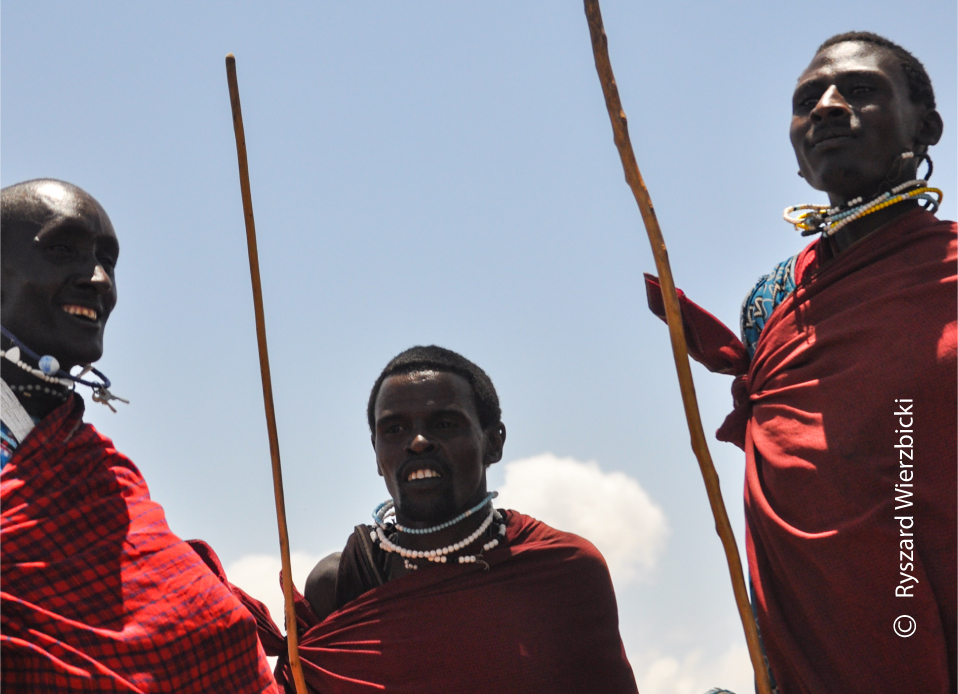
The photograph captures the iconic Adumu, or 'jumping dance,' a quintessential Maasai ceremony performed by the indigenous people of Kenya and Tanzania. Ryszard Wierzbicki freezes the high-energy movement of the warrior mid-air, emphasizing the cultural significance of this tradition. By utilizing a fast shutter speed of 1/1500sec, the photographer successfully isolates the subject against the vast landscape, showcasing the raw athleticism and cultural pride inherent in the ritual. This image is award-worthy for its ability to document a fleeting, culturally rich moment with technical precision, offering viewers an intimate glimpse into the traditional life of the Maasai people.
Ryszard Wierzbicki
Born in 1963, Ryszard Wierzbicki is a Polish-born photographer and educator who relocated to the United Kingdom in 2006. A graduate of the University of Gdańsk, he transitioned from a diverse career in social sciences and marketing to pursue his deep-seated passions for travel, scuba diving, and photography. Wierzbicki is known for his extensive exploration of South-East Asia and his commitment to charitable work with orphans. Through his platforms, Instant Travelling and World Around, he shares his unique perspective on global cultures, blending his professional background with a nomadic spirit to document the world's most compelling human experiences.
Resonance Score Breakdown
Transparency Note: The resonance score (9.2/20) is calculated based on social engagement metrics collected before the award announcement.
Expert Photography Reviews · 7
Gravity and the Upward Pull
There is a particular quality to the air just before a summer storm breaks, when the heat has been pressed into the earth for so long that the atmosphere feels heavy, almost solid.
Read the reflection →Defying the Weight of Earth
I tried to jump rope in the park this morning, just to get my blood moving before the day started. I haven't done it in years, and I felt heavy, clumsy, and entirely tethered to the ground.
Read the reflection →Reviews & Comments
Share your thoughts about this award-winning photograph. Your reviews contribute to the community engagement score.
The warrior’s knees are locked, but the torso hasn’t yet reached the apex of the vertical drive. It’s a fraction early. I’ve spent my life watching bodies coil and release; here, the tension is still building in the calves. It’s technically sharp, sure, but it misses the weightless instant where gravity loses its grip. I wanted to see that total suspension. It’s a good shot, but it isn’t the frame that defines the jump.
Gravity doesn’t stand a chance here. Wierzbicki caught the warrior at the absolute apex of his leap, that split second where he’s suspended between earth and sky. It’s pure kinetic energy. If he’d clicked a fraction later, the tension would’ve evaporated into the dust. I’ve spent years chasing these ghosts, and seeing this, I actually caught my breath. It’s not just a dance; it’s a defiance of physics. He nailed the timing perfectly. That’s the street.
The dry, ochre earth of Monduli Juu stretches out, a vast, unforgiving stage that demands everything from the performer. That arid horizon isn’t just scenery; it’s the crucible of the Maasai identity. When the warrior leaps, he’s suspended against that brutal, beautiful emptiness. I’m breathless watching him defy gravity. It’s not just a jump; it’s a dialogue with the dust. The landscape forces him upward, proving that without this harsh soil, his strength wouldn’t exist.
The ochre of the Maasai shuka, that burning, sun-baked pigment reminiscent of a Turner sunset, erupts against the arid, dust-muted horizon with such ferocity it’s as if the earth itself has exhaled. I’m breathless watching how the crimson vibrates against the pale, parched scrub, a chromatic dissonance that feels like a physical pulse. It’s not merely a dance; it’s a visceral, saturated collision of heat and light that makes one’s own heart stutter in the silence.
1/1500sec at f/6.7, 55mm. The shutter speed is overkill, yet it’s the only thing keeping this frame from collapsing into blur. ISO 400 was a lazy choice for daylight; it’s introduced unnecessary noise into the shadows. I’ve seen enough jumping Maasai to know the timing is standard, but the technical execution is merely adequate. It’s functional, not inspired. Honestly, the lack of sharpness on the subject’s face irritates me. It doesn’t quite hit the mark.
Suspended in the thin, unforgiving air of Monduli Juu, the warrior defies gravity, yet he doesn’t escape the earth. Wierzbicki’s shutter speed is a scalpel, slicing time into a clinical stillness that feels almost violent. I’m unsettled by the lack of depth in the shadows beneath his feet; they’re too shallow, too polite. It’s a performance of height that forgets the weight of the ground. Without the darkness to anchor him, he’s merely drifting, unmoored from his own history.
Freezing a warrior mid-air is a technical feat, but it’s a cold one. I’m looking for the man behind the ritual, yet he’s just a silhouette against the sky. Where’s the connection? It feels like a performance staged for a lens rather than a shared moment. I want to see the sweat, the exhaustion, the human reality of that jump. It’s a sharp picture, sure, but it doesn’t tell me who he is. I’m left wanting more.