What Remains after Us by Silvia Bukovac Gasevic
Created as an exploration of primary colors, this striking still life centers on the theme of red. The image serves as a poignant commentary on the environmental footprint humanity leaves behind, highlighting the unnatural remnants that persist in the wild. Captured with a telephoto lens to isolate the subject, the composition emphasizes the stark contrast between the vibrant hue and its surroundings. The photographer’s ability to transform a discarded object into a compelling narrative on ecological responsibility makes this piece a standout example of thoughtful, intentional still life photography.
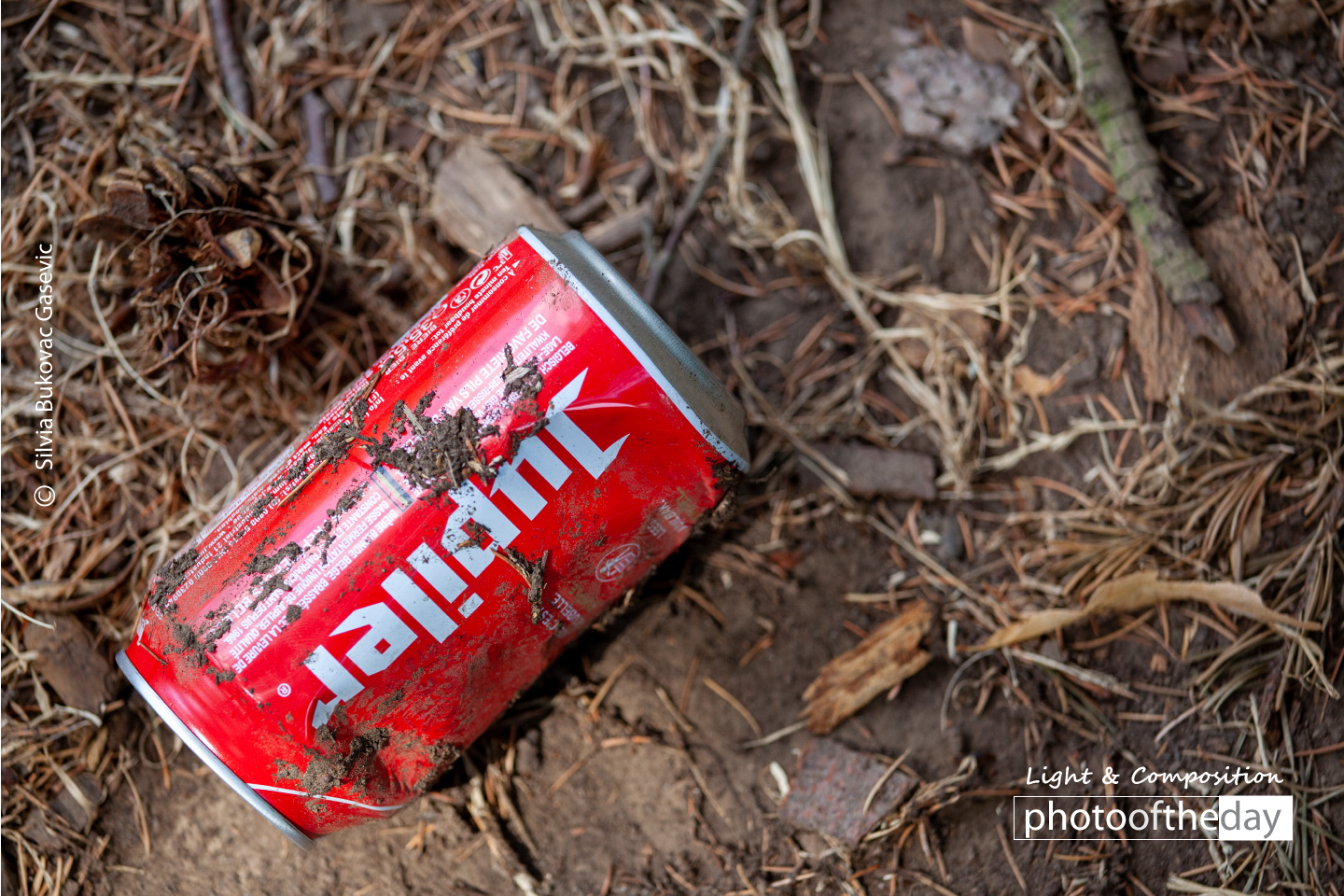
Exposure 1/160sec @ f/4.0 | ISO 200 | Focal Length 121mm
Silvia Bukovac Gasevic
Born in Croatia and currently based in Germany, Silvia Bukovac Gasevic is a dedicated photographer with a deep passion for nature and animal life. She balances her creative pursuits as a freelance photographer for three international agencies, constantly seeking aesthetic beauty in the world around her. Driven by the pursuit of the perfect image, she maintains a camera at her side at all times, documenting the world with a keen eye for detail and a commitment to capturing the essence of her subjects.
Resonance Score Breakdown
Transparency Note: The resonance score (8.4/20) is calculated based on social engagement metrics collected before the award announcement.
Expert Photography Reviews · 4
The Weight of the Unwanted
Archaeologists often speak of the midden—the ancient refuse heap. It is the most honest archive we possess.
Read the reflection →The Echo of Our Passing
Dear traveler, I have been thinking about the things we leave behind when we think no one is watching. We are so careful with our legacies, aren't we?
Read the reflection →Reviews & Comments
Share your thoughts about this award-winning photograph. Your reviews contribute to the community engagement score.

It’s refreshing to see a telephoto lens used to flatten space rather than just hunt for detail. Gasevic’s red subject feels suspended, almost vibrating against the blur. I’m genuinely struck by how she’s abandoned the sharp, clinical still life aesthetic for something more elusive. Why resolve the texture of the plastic when the color’s ghost is more haunting? It’s closer to Sugimoto’s long-exposure theatres than to conventional documentary work. She’s chosen to prioritize atmosphere over forensic clarity.
The frame’s geometry hinges on the red object’s placement, anchoring the composition against the chaotic periphery. It’s a rigid exercise in spatial tension. The telephoto compression flattens the picture plane, forcing the subject into a claustrophobic dialogue with the background. I’m genuinely irritated by the lack of breathing room here, yet the structural discipline is undeniable. It doesn’t rely on sentiment. The weight is distributed with cold, clinical precision. The frame holds, barely.
The red plastic bleeds into the muted earth, a jarring, lonely cry against the silence of the soil. I’ve spent enough hours in the field to recognize that ache—the moment the light stops being a tool and starts being a judgment. She stood there, waiting for the shadows to soften, watching the debris reclaim its space. It’s a quiet, stinging reminder of our own transience. Honestly, it makes me want to sit down and just breathe.
We look at this discarded red remnant and we don’t see trash; we see a ghost of someone’s afternoon. Silvia listened to the silence of the Brussels soil before she clicked. It’s a portrait of an absence, a human footprint left behind in vibrant, aching color. I find myself shivering at the loneliness of that plastic hue against the earth. It’s a photograph that asks to be returned to, long after we’ve walked away.