Listen What I Sing by Jabbar Jamil
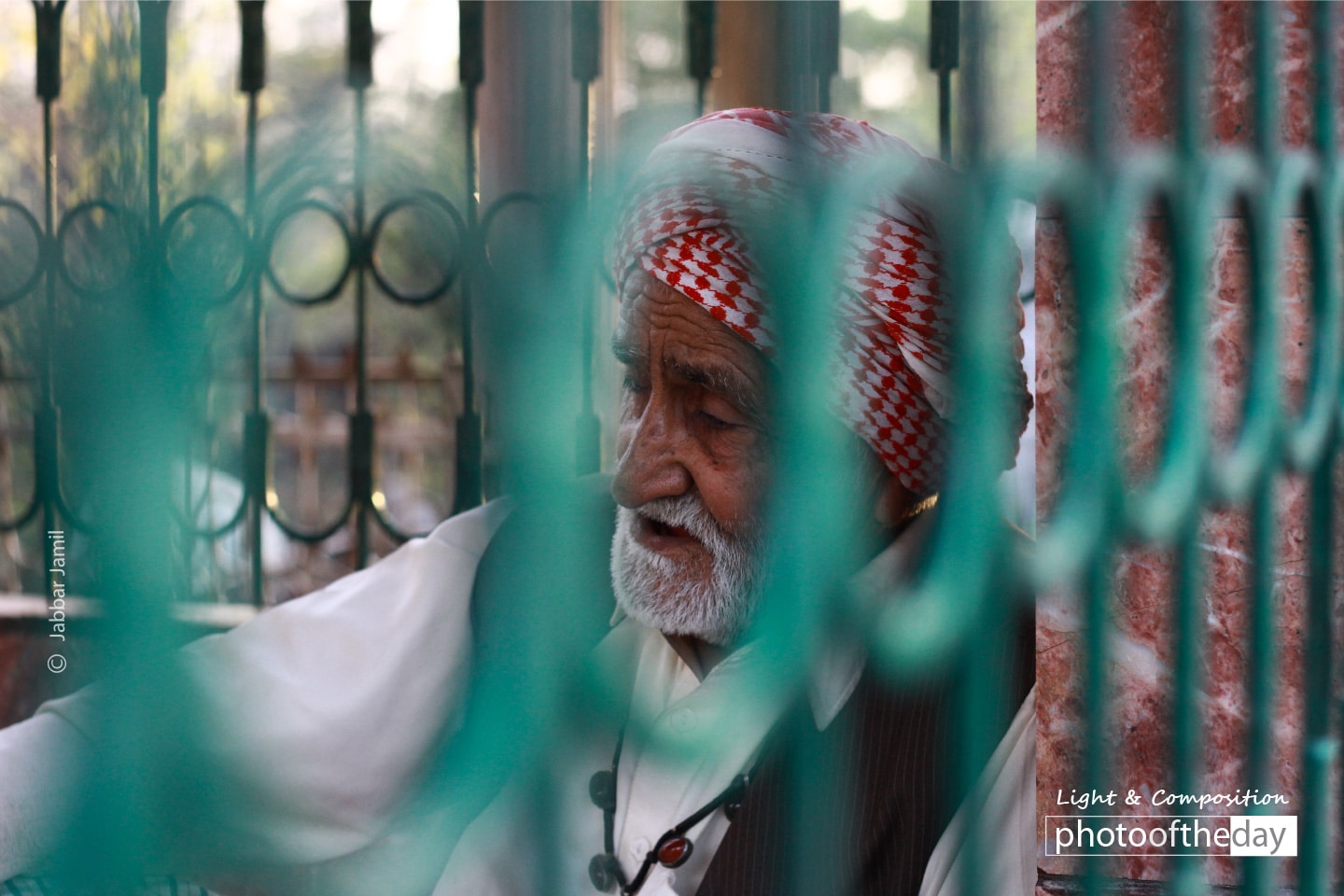
Captured at the Darbar Imam Sahib in Sialkot, this poignant documentary photograph documents a moment of profound human connection. The photographer encountered a man at the shrine's entrance and, after gaining permission, followed him inside to find him seated on the ground, singing with a voice of remarkable melody. The image captures the quiet intensity of the performance amidst a gathering of captivated listeners. It is an award-worthy piece for its ability to translate the raw, soulful atmosphere of the scene into a visual narrative, highlighting the intersection of faith, music, and everyday life.
Jabbar Jamil
Based in Sialkot, Pakistan, Jabbar Jamil is a dedicated street photographer who views his craft as a vital bridge to the outside world. By stepping beyond his comfort zone, he uses his camera to forge meaningful human connections and express his creative vision. His work serves as both a personal stress-reliever and a candid exploration of his surroundings, capturing the unfiltered reality of life with an honest and observant eye.
Resonance Score Breakdown
Transparency Note: The resonance score (11.7/20) is calculated based on social engagement metrics collected before the award announcement.
Expert Photography Reviews · 8
The Architecture of Devotion
We often mistake the city for its hard surfaces—the concrete, the glass, the grid of streets that dictate our movement. But the true geography of an urban space is found in the pockets of resistance where people gather to reclaim their humanity.
Read the reflection →The Resonance of Dust
The air inside an old room has a specific weight, a thickness that clings to the back of the throat like fine, dry flour. It smells of damp stone and the slow, steady decay of incense that has long since surrendered its smoke to the rafters.
Read the reflection →Reviews & Comments
Share your thoughts about this award-winning photograph. Your reviews contribute to the community engagement score.
The threshold here is everything. By framing the singer against the deep, rhythmic fenestration of the Darbar, Jamil captures how architecture anchors devotion. The light doesn’t just illuminate the man; it defines the solid mass of the shrine, grounding his melody in the geometry of the space. I’m struck by the way the shadows pull the listeners into the void. It’s a rare, honest sequence—a reminder that a building’s true scale is measured by human breath.
We sit at the feet of this man in Sialkot, and we hear the melody before we see the frame. Jabbar didn’t just point a lens; he waited until the song became the man. It’s a rare, quiet intensity that pulls us into his devotion. I’ve felt this kind of stillness in the shrines of my own youth. It’s a photograph that asks to be returned to, because it’s truly listening.
The frame hums. It’s a long take, a single breath held in the dust of the shrine. I’m leaning in, feeling the vibration of that melody against the stone floor. The composition anchors the singer, letting the listeners blur into the background rhythm. It’s a perfect cut; any movement would have ruined the tension. I’ve seen a thousand performances, but this one stays still. It’s the frame the editor keeps because it’s already singing.
You can tell this man didn’t just tolerate the camera; he invited it into his song. There’s a rare, quiet vulnerability in the way he holds his posture, completely unbothered by the lens. I’ve spent years in shrines like this, and it’s clear he trusted Jabbar. It’s a gift, really. Looking at the way his hands rest, I feel a sudden, sharp ache of nostalgia for the places I’ve left behind. This face has a whole life in it.
One suspects Jamil didn’t just stumble upon this. To capture that particular tilt of the singer’s head amidst the shadows of the Darbar requires more than a quick shutter click; it demands the patience to become part of the furniture. I’ve spent enough damp mornings waiting for the light to know when someone’s put in the hours. It’s a rare, quiet dignity here. I find myself wishing I’d been the one sitting on that floor.
The floor stretches. It’s vast, cold stone. A man sits, a small anchor in the expanse. He sings. The listeners don’t crowd him. They leave room for the sound to travel. I’ve felt that ache before, the way a voice fills a void without cluttering it. Nothing here is accidental. The empty corner is not empty. It’s where the music lives. It’s quiet. It’s enough. I find myself holding my breath, just to listen.
That man’s throat is vibrating with a song I can almost hear. It’s a raw, trembling instant. Jamil didn’t just watch; he moved with the singer. If he’d clicked a fraction later, the tension in those listeners’ faces would’ve dissolved into static. I’m actually leaning in, trying to catch the melody. It’s that rare, honest alignment where faith meets the shutter. You caught the soul of Sialkot. It’s a perfect, unrepeatable heartbeat. Keep shooting like this.
The interplay of shadow and light here echoes the chiaroscuro of W. Eugene Smith’s Spanish Village, yet Jamil finds a different, softer resonance. The way the singer’s posture anchors the frame recalls the devotional stillness in early ethnographic studies, but it’s far more intimate. I’m genuinely moved by the way the light catches his throat; it’s a visceral, tactile detail I haven’t seen captured quite like this in years. It’s a quiet, profound conversation with tradition.