City of Blinding Lights by Yasef Imroze
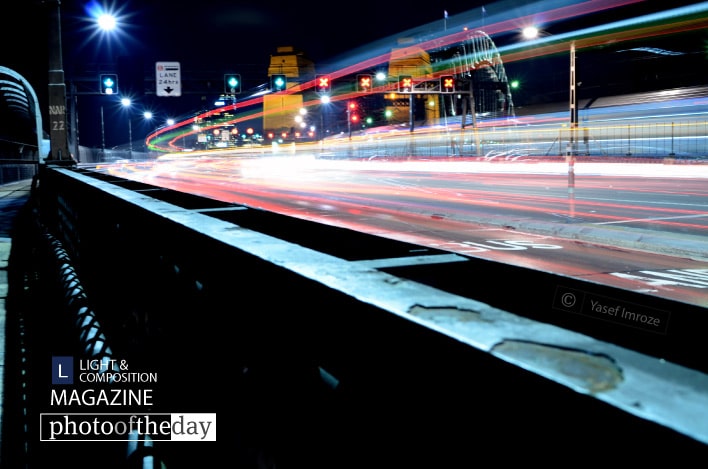
Captured from the vantage point of the Cahill Walkway, this long-exposure photograph masterfully transforms the bustling energy of Sydney into a symphony of motion. By utilizing a fifteen-second exposure, the photographer turned the city’s fast-moving traffic into ribbons of light, contrasting the kinetic pulse of urban life against the static, iconic architecture of the harbor city. This image is award-worthy for its technical precision in balancing ambient light with motion blur, effectively conveying the photographer's sentiment that even in a foreign landscape, a city can provide a profound sense of belonging and home.
Yasef Imroze
Originally from Dhaka, Bangladesh, Yasef Imroze Ifaz is currently pursuing his undergraduate studies at Macquarie University in Australia. Though photography began as a recent hobby, he has quickly developed a keen eye for landscape and close-up compositions. Driven by a desire to document the natural beauty of his home country and his new surroundings, he views the camera as an essential companion for his future travels. His work reflects a transformative shift in his perception of the world, capturing the joy he finds in the art of visual storytelling.
Resonance Score Breakdown
Transparency Note: The resonance score (12.7/20) is calculated based on social engagement metrics collected before the award announcement.
Expert Photography Reviews · 3
The Architecture of Flow
In the nineteenth century, the telegraph changed our relationship with distance. Suddenly, a thought could travel across a continent in the time it took to draw a breath.
Read the reflection →Rivers of Stolen Time
I was walking home from the station tonight, and for a few minutes, I just stopped on the bridge. The cars were rushing past below, a constant, humming stream of red and white.
Read the reflection →Reviews & Comments
Share your thoughts about this award-winning photograph. Your reviews contribute to the community engagement score.
15 seconds at f/9, ISO 100, 28mm. The aperture choice is correct; it keeps the diffraction limited while ensuring the light trails don’t bloom into incoherent smears. It’s a calculated, stable exposure. I’ve spent enough nights on that walkway to know the vibration from passing trains is a nightmare, yet the static architecture remains sharp. It’s technically sound, though I’m left cold. Precision is here, but the soul of the city feels entirely calculated.
The frame’s architecture relies on the horizontal sweep of light trails to anchor the composition. It’s a rigid geometry that forces the eye across the picture plane, effectively neutralizing the chaos of the Sydney traffic. The static harbor architecture provides a necessary fulcrum, balancing the kinetic blur. I’ve grown weary of such long exposures, yet the structural discipline here holds firm. It doesn’t collapse into sentimentality. The spatial tension is precise, calculated, and entirely earned.
Of the thousands of long-exposure cityscapes I’ve reviewed, most are just technical exercises. This one survives because the fifteen-second drag doesn’t just blur traffic; it anchors the static architecture against the kinetic pulse of Sydney. I’m genuinely moved by how those light ribbons feel like veins pumping life into the harbor. It’s a rare, honest capture of urban belonging. Thirty years from now, people will still recognize this specific, electric hum of a city.