Cruzando by Sergio Barrios
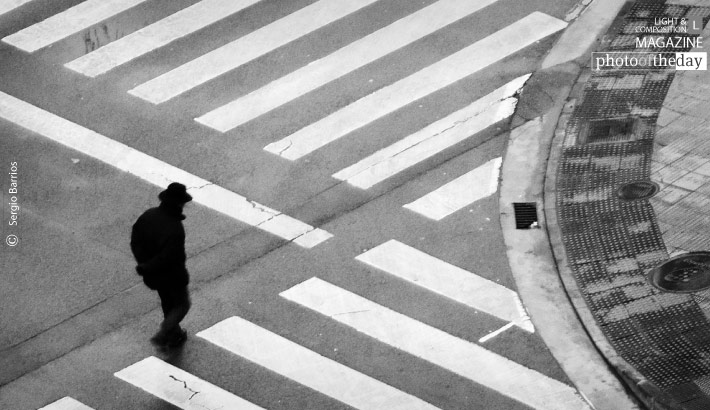
Captured on a crisp November day in 2009, 'Cruzando' freezes a fleeting moment of street life in La Rioja, Spain. The photographer demonstrated a keen eye for timing, waiting for the perfect intersection of light and human movement to define the frame. This image is award-worthy for its authentic portrayal of urban atmosphere, where the composition transforms an ordinary street crossing into a compelling narrative of daily life. The work highlights the photographer's ability to find profound beauty in the mundane, turning a simple walk across a city street into a timeless, evocative visual story.
Sergio Barrios
Based in La Rioja, Spain, Sergio Barrios Nuñez is a dedicated street photographer with a passion for capturing the transient beauty of everyday life. With over three years of focused experience in the craft, he has developed a sharp instinct for identifying and preserving decisive moments within the urban landscape. His work reflects a commitment to authentic storytelling, consistently seeking to reveal the quiet, human-centric narratives that unfold on the streets of his home country.
Resonance Score Breakdown
Transparency Note: The resonance score (14.6/20) is calculated based on social engagement metrics collected before the award announcement.
Expert Photography Reviews · 4
The Geometry of Passing
In the nineteenth century, the flâneur was defined not by where he went, but by the rhythm of his wandering. He was a botanist of the sidewalk, a man who treated the city as a landscape to be read like a book. There is a strange, quiet dignity in the act of crossing a street.
Read the reflection →The Weight of the Crossing
We are always in transit. From one shadow to the next, we carry the burden of our own history, though we leave no footprints on the pavement.
Read the reflection →Reviews & Comments
Share your thoughts about this award-winning photograph. Your reviews contribute to the community engagement score.
Shadows here aren’t merely cast; they anchor the subject to the asphalt, demanding a reckoning with the void. Barrios understands that light is a violent intrusion upon the silence of the street. When I look at the way those figures emerge from the gloom, I feel a sudden, cold shiver of existential isolation. It’s not a crossing of a road, but a transit through the dark, unyielding architecture of our own fleeting, fragile presence.
Most street photography is just noise, but here, the geometry of the shadows against the pavement anchors the chaos. I’ve seen thousands of crossings, yet Barrios captures a specific, lonely rhythm that feels like a memory I’ve misplaced. It’s the way the light catches the pedestrian’s stride—that fleeting tension—that makes me stop. It’s not just a walk; it’s a quiet, permanent mark on a November day. Thirty years from now, we’ll still be watching him cross.
It’s a crisp November day, and one can almost feel the bite in the air. Barrios clearly didn’t just stumble upon this crossing; he’s stood there long enough for the shadows to lengthen and the light to sharpen just so. I’ve spent enough shivering hours on street corners to recognize the patience required here. It’s a quiet, earned moment. He didn’t chase the shot; he let the city walk into his frame. Well played.
The ochre of the La Rioja pavement, reminiscent of a sun-bleached Morandi still life, anchors the frame, while the pedestrian’s coat—a sharp, melancholic slate—cuts through the light like a Vermeer shadow. It’s a quiet, chromatic friction that makes my heart ache with a sudden, inexplicable longing for the Spanish autumn. One finds here a rare, atmospheric stillness where the muted, dusty tones don’t just exist; they breathe, vibrating against the crisp, cold November air.