Expedition Overview
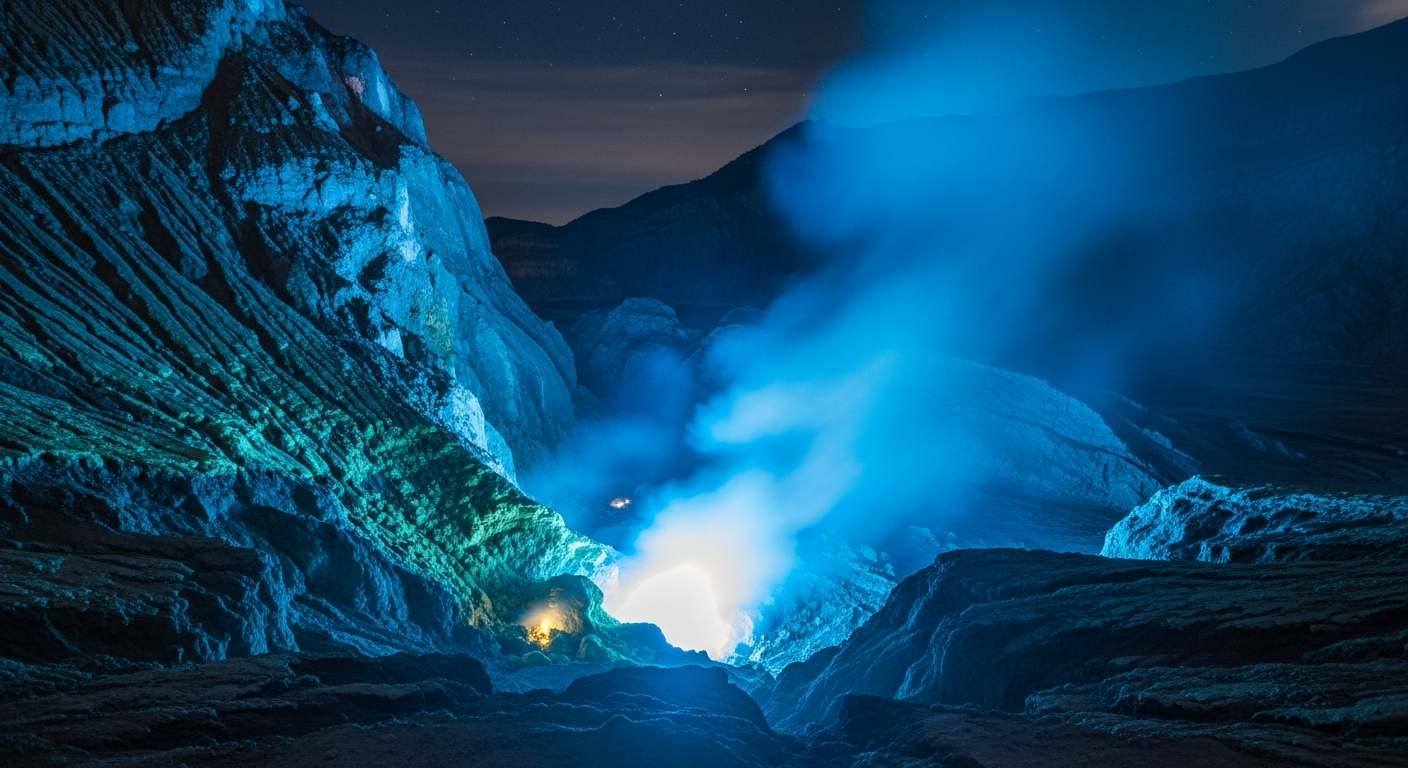
The Kawah Ijen volcano on the eastern tip of Java contains one of the most extraordinary photography subjects on earth: the blue fire — burning sulphuric gas that ignites in the open air at the crater floor, producing flames of cobalt blue up to 5 metres high that are visible only in complete darkness. From 1am to 4am, in the darkness of the crater, the blue flames burn while miners with baskets on their shoulders carry 80kg loads of solid sulphur up a rope-assisted path — a documentary photography subject of extraordinary drama and ethical weight.
The Ijen experience is physically demanding — a 3km trail with 700m of ascent and a descent into the crater itself in the dark — and requires a gas mask at all times near the vent. Professor Nasrul Eam treats the subject with the seriousness it demands: the photography of the sulphur miners is approached with deep respect for the extreme conditions they work in, and participants develop their own considered position on how to photograph labour and hardship with integrity.
Expedition Itinerary
Day 1: Drive to Paltuding & Rest
Drive from Banyuwangi or Bondowoso to the Paltuding trailhead (1800m). Arrive by early evening to eat and rest before the midnight start. Brief on gas mask use and crater descent protocol.
The Goal of the Day: Logistics preparation; mental readiness for a demanding night.
Day 2: Blue Fire Night Photography
1am departure on the dark trail. Headlamps and gas masks. Descent into the crater by rope. The blue flames are visible from the crater rim but the closer descent delivers the full scene: fire, steam, miners, and the green glow of the sulphuric lake. Shoot until dawn.
The Goal of the Day: Night fire photography at extreme low light; the ethics of photographing difficult labour.
Day 3: Sunrise Crater Lake & Bondowoso Coffee
Dawn reveals the full crater: the turquoise acid lake (the world's largest, pH 0.5) and the sulphur chimneys steaming in morning light. Descent and drive to a Bondowoso arabica coffee plantation for afternoon photography of the harvest and processing.
The Goal of the Day: Volcanic landscape in full light; craft agriculture documentation.
Book Your Expedition
Note: Final price may vary based on specific expedition details and customizations.
Expedition Leaders
Professor Nasrul Eam is a seasoned explorer and visual storyteller who has spent over two decades traversing Asia’s diverse landscapes and cultures. As Dean of the Department of Art and Photography at Light & Composition University, he leads immersive photography expeditions to regions like the Himalayas, Sundarbans, and Bali. These journeys blend cultural exploration with hands-on learning, culminating in a complete photography diploma. With a portfolio of over 50 publications—including The Quintessence of Photography and Illuminating Nature—his work captures the profound beauty of everyday life. His background in advertising, linguistics, and visual arts enriches his mentorship, guiding participants to uncover compelling narratives through their lenses. Professor Eam’s expeditions are transformative experiences, inspiring photographers to engage deeply with the world around them.
Travel Information
Nearest airport: Banyuwangi (30 min). Surabaya is 6 hours by road. Best season: April–October. November–March has frequent cloud and rain at the crater, which reduces blue fire visibility.
What to Bring
• Gas mask (half-face respirator with P100 + organic vapour filters — PROVIDED but bring your own if preferred)
• Warm layers for 1am crater entry (cold despite tropical latitude)
• Wide-angle for blue fire (close-range in near-darkness)
• 24–70mm f/2.8 or faster — high ISO essential
• Red torch (preserves night vision)
• Sturdy non-slip footwear for the crater descent