The cocoa dust clings to these truffles like a curated memory of domesticity. It’s technically precise, sure, but why does it feel so sterile? I’m left craving a crumb, a smear, or some sign of a human hand that isn’t just a sanitized aesthetic. Who are we performing this Valentine’s perfection for? I find myself wanting to smudge the frame just to prove someone actually lived here. It’s beautiful, but is it honest?
The composition functions as a study in spherical distribution. Three primary masses occupy the frame, creating a tight triangular vector that anchors the visual weight. The shallow depth of field isolates the central truffle, effectively reducing the background to a soft, blurred plane. I’m genuinely captivated by how the cocoa dust breaks the perfect geometry of the spheres. It’s a precise spatial equation where the texture provides the necessary friction to balance the composition’s inherent mathematical softness.
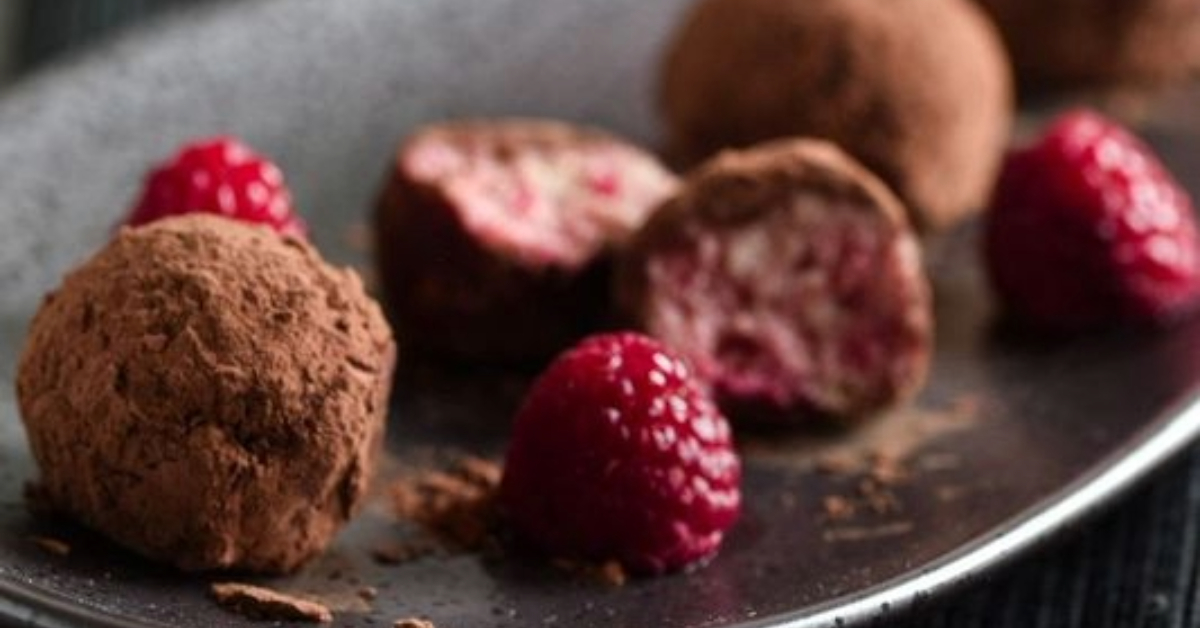
The cocoa-dusted spheres possess a velvet depth reminiscent of Morandi’s muted, dusty shadows, yet it’s the sudden, piercing crimson of the raspberry heart that truly arrests one’s pulse. I’m utterly undone by how that vibrant, jammy magenta bleeds into the mascarpone’s pale, chalky cream, creating a chromatic tension that feels less like a confection and more like a fever dream of winter light. It’s a luscious, tactile collision of pigments that I’d happily lose myself within.
The soft, diffused light grazing the cocoa dust evokes the quietude of a Dutch still life, where every grain matters. It’s not just a dessert; it’s a tactile invitation. I’m genuinely craving the warmth of that kitchen. By isolating the truffles, the environment becomes a velvet stage, suggesting a home filled with patience and care. The shallow depth of field doesn't just blur the background; it elevates these humble ingredients into a sophisticated, intimate portrait of domestic love.
The tactile grit of cocoa dust here echoes the still-life precision of Edward Weston’s peppers, yet it’s far more intimate. By isolating these spheres with a 105mm lens, Verčko avoids the clinical sterility of modern commercial food catalogs. It’s a quiet, velvety study of texture that I’ve rarely seen handled with such restraint. Honestly, it makes me crave the sweetness. It’s a lovely, grounded departure from the over-processed digital perfection we’re drowning in these days.
Of the thousands of food shots I’ve reviewed, most are just glossy advertisements. This one lingers. The choice to let the cocoa dust settle unevenly on the truffles gives them a tactile, human vulnerability that slick studio work lacks. It’s the imperfection that makes me want to reach out and taste them. In thirty years, we won’t remember the lens, but we’ll remember the quiet, intimate warmth of this kitchen. It’s a rare, honest moment.
1/25sec at f/5.6 on a 105mm macro. Handheld? It’s a gamble that barely pays off. The shutter speed is dangerously sluggish, risking micro-blur that softens the cocoa texture. I’ve spent years chasing sharpness, and this lack of tripod stabilization irritates me. Still, the f/5.6 choice is correct. It provides enough depth to define the truffles without losing the background to total abstraction. It’s technically risky, but the execution holds together. Barely.
It’s a relief to look at something that doesn't require me to question the subject’s dignity. After weeks spent hiding in damp blinds, watching for a kingfisher’s patience, this stillness feels like a vacation. The cocoa dust on these truffles is perfectly undisturbed, a quiet contrast to the frantic, intrusive proximity I usually critique. It’s clean, honest work. I’d much rather see a photographer treat a dessert with this much respect than exploit a living creature.
Cocoa dust clings to these spheres like ash on a funeral pyre. It’s a quiet, heavy stillness. Verčko’s lens isolates the truffle, yet I’m haunted by the encroaching dark at the frame’s edge. It doesn’t invite consumption; it demands a reckoning with the void. I’ve stared at these truffles until my eyes ached, feeling the weight of the shadow. It’s not a dessert. It’s a deliberate, velvet-cloaked silence that refuses to be consumed by the light.
There’s a quiet intimacy in these truffles that feels like a kitchen table conversation. You can almost smell the cocoa and tart fruit. It’s not a portrait of a person, but it captures the warmth of the hands that rolled them. I find myself wanting to reach out, not just to eat, but to thank whoever made them. It’s a rare, lovely thing when a still life feels this deeply human and cared for.
There’s a quiet intimacy in these truffles that feels like a kitchen table conversation. You can almost smell the cocoa and tart fruit. It’s not a portrait of a person, but it captures the warmth of the hands that rolled them. I find myself wanting to reach out, not just to eat, but to thank whoever made them. It’s a rare, lovely thing when a still life feels this deeply human and cared for.
Cocoa dust clings to these spheres like ash on a funeral pyre. It’s a quiet, heavy stillness. Verčko’s lens isolates the truffle, yet I’m haunted by the encroaching dark at the frame’s edge. It doesn’t invite consumption; it demands a reckoning with the void. I’ve stared at these truffles until my eyes ached, feeling the weight of the shadow. It’s not a dessert. It’s a deliberate, velvet-cloaked silence that refuses to be consumed by the light.
It’s a relief to look at something that doesn’t require me to question the subject’s dignity. After weeks spent hiding in damp blinds, watching for a kingfisher’s patience, this stillness feels like a vacation. The cocoa dust on these truffles is perfectly undisturbed, a quiet contrast to the frantic, intrusive proximity I usually critique. It’s clean, honest work. I’d much rather see a photographer treat a dessert with this much respect than exploit a living creature.
1/25sec at f/5.6 on a 105mm macro. Handheld? It’s a gamble that barely pays off. The shutter speed is dangerously sluggish, risking micro-blur that softens the cocoa texture. I’ve spent years chasing sharpness, and this lack of tripod stabilization irritates me. Still, the f/5.6 choice is correct. It provides enough depth to define the truffles without losing the background to total abstraction. It’s technically risky, but the execution holds together. Barely.
Of the thousands of food shots I’ve reviewed, most are just glossy advertisements. This one lingers. The choice to let the cocoa dust settle unevenly on the truffles gives them a tactile, human vulnerability that slick studio work lacks. It’s the imperfection that makes me want to reach out and taste them. In thirty years, we won’t remember the lens, but we’ll remember the quiet, intimate warmth of this kitchen. It’s a rare, honest moment.
The tactile grit of cocoa dust here echoes the still-life precision of Edward Weston’s peppers, yet it’s far more intimate. By isolating these spheres with a 105mm lens, Verčko avoids the clinical sterility of modern commercial food catalogs. It’s a quiet, velvety study of texture that I’ve rarely seen handled with such restraint. Honestly, it makes me crave the sweetness. It’s a lovely, grounded departure from the over-processed digital perfection we’re drowning in these days.
The soft, diffused light grazing the cocoa dust evokes the quietude of a Dutch still life, where every grain matters. It’s not just a dessert; it’s a tactile invitation. I’m genuinely craving the warmth of that kitchen. By isolating the truffles, the environment becomes a velvet stage, suggesting a home filled with patience and care. The shallow depth of field doesn’t just blur the background; it elevates these humble ingredients into a sophisticated, intimate portrait of domestic love.
The cocoa-dusted spheres possess a velvet depth reminiscent of Morandi’s muted, dusty shadows, yet it’s the sudden, piercing crimson of the raspberry heart that truly arrests one’s pulse. I’m utterly undone by how that vibrant, jammy magenta bleeds into the mascarpone’s pale, chalky cream, creating a chromatic tension that feels less like a confection and more like a fever dream of winter light. It’s a luscious, tactile collision of pigments that I’d happily lose myself within.
The composition functions as a study in spherical distribution. Three primary masses occupy the frame, creating a tight triangular vector that anchors the visual weight. The shallow depth of field isolates the central truffle, effectively reducing the background to a soft, blurred plane. I’m genuinely captivated by how the cocoa dust breaks the perfect geometry of the spheres. It’s a precise spatial equation where the texture provides the necessary friction to balance the composition’s inherent mathematical softness.
The cocoa dust clings to these truffles like a curated memory of domesticity. It’s technically precise, sure, but why does it feel so sterile? I’m left craving a crumb, a smear, or some sign of a human hand that isn’t just a sanitized aesthetic. Who are we performing this Valentine’s perfection for? I find myself wanting to smudge the frame just to prove someone actually lived here. It’s beautiful, but is it honest?