A Long Walk by José J. Rivera-Negrón
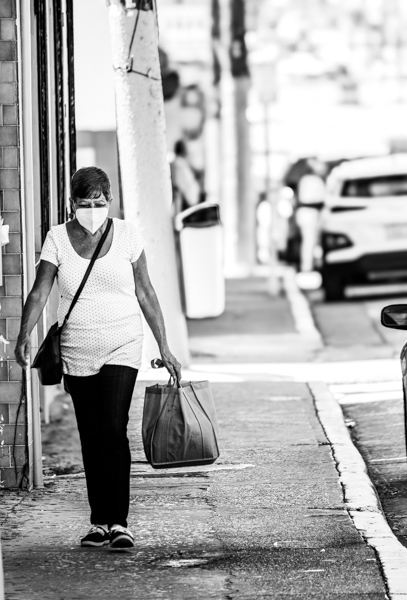
In one of my trips to Puerto Rico, I visited the city of Arecibo, it’s an old city with a lot of history. While walking through the downtown where many visitors come from neighbors cities, also local people come to work, sale and even shop, there was a lady walking up a hill with her heavy bag, in a regular sunny hot day. I wondered if this lady was on her way to work or just shopping, but I know for sure that it must have been pretty exhausting to walk through town in such incredibly weather.
José J. Rivera-Negrón
José J. Rivera-Negrón was born in Puerto Rico and later moved to the United States, where he faced years of addiction, poverty, and life on the streets. After reaching a personal turning point, he sought help, completed rehabilitation, and made a firm decision to change his life. Those difficult experiences deeply shaped his perspective and eventually led him to photography—a medium through which he could express truth, struggle, and hope.
Today, Jose is a photographer whose work reflects resilience, recovery, and human connection. Through his travels, he documents diverse cultures and tells stories that carry messages of awareness, especially around addiction recovery and mental health. Working with Light and Composition has allowed him to share his vision with a wider audience. His journey stands as a reminder that even after the darkest chapters, it is always possible to start again and pursue one’s purpose.
Resonance Score Breakdown
Transparency Note: The resonance score (4.4/20) is calculated based on social engagement metrics collected before the award announcement.
Expert Photography Reviews · 7
The Weight of the Ascent
The smell of sun-baked asphalt always brings me back to the feeling of grit against my soles. It is a dry, metallic scent, the kind that clings to the back of your throat when the air is too thick to move through.
Read the reflection →The Weight of the Incline
Cities are rarely built for the pedestrian, despite what the brochures claim. We design our streets for the flow of capital and the speed of transit, often forgetting that the city is, at its most fundamental level, a physical burden carried by those who inhabit it.
Read the reflection →Reviews & Comments
Share your thoughts about this award-winning photograph. Your reviews contribute to the community engagement score.
At 375mm, the compression of the atmospheric haze against the steep incline is palpable. Rivera-Negrón’s choice of f/6.3 keeps the focal plane tight, rendering the lady’s struggle with a clinical, sharp detachment. I’m genuinely moved by how the diffraction of light across the sun-drenched pavement creates such a harsh, unforgiving micro-contrast. It’s a brutal optical reality; you can almost feel the heat radiating off the asphalt. The lens hasn’t just captured a walk; it’s resolved the exhaustion.
You caught her mid-stride, and I can feel the weight of that bag pulling at her shoulder. It’s a brutal, honest heat you’ve captured in Arecibo. I’ve walked those hills, and the exhaustion in her posture hits me right in the gut. You didn’t just snap a street scene; you felt her fatigue. And that’s what matters. You waited for the right moment to show us the human cost of a simple errand. It’s real.
The steep incline dictates the frame’s geometry, forcing a precarious diagonal that anchors the subject. It’s a rigid, unforgiving architecture. The negative space above the figure provides necessary breathing room, preventing the composition from collapsing under the weight of the ascent. I’m genuinely unsettled by how the vertical lines of the architecture compress the subject against the pavement. It’s a brutal, effective use of perspective. The frame holds, though the tension remains barely contained.
The heat radiates off the pavement; you can feel the humidity clinging to her clothes. It’s a grueling climb, captured with a telephoto compression that flattens the hill into a wall of resistance. I’ve seen this scene in a dozen neorealist films, but here, the stillness is the point. The shutter speed holds the exhaustion perfectly. It’s a frame the editor keeps because the cut would have been a mistake. I’m genuinely winded just looking at her.
The heat in Arecibo doesn’t just burn; it erases. Rivera-Negrón captures this woman ascending, yet he’s hesitant to let the shadows swallow her struggle. I’ve spent my life arguing that darkness is where the image thinks, but here, the light is too polite, too pervasive. It’s a bright, exhausting climb that lacks the necessary gravity of true silence. I feel a strange, hollow ache watching her—she’s walking toward a clarity that simply isn’t earned.
Before the eye identifies the incline, a heaviness settles in the shoulders. It’s the visceral weight of that bag, pulling at the viewer’s own posture. I feel a sudden, sharp thirst watching her navigate that Arecibo heat. The image doesn’t just document a walk; it triggers a sympathetic fatigue. When I return to this a year from now, I suspect I’ll still feel the sun’s glare pressing against my skin, demanding a pause I can’t quite take.
Arecibo’s heat radiates off this frame. Rivera-Negrón caught the exact drag of that bag against the incline. It’s the weight of the day captured in a single stride. If he’d fired a fraction later, the tension in her posture would’ve vanished into the sidewalk. I feel the sweat on my own neck just looking at it. That’s the street—ruthless, honest, and fleeting. He didn’t blink. He caught the struggle before it dissolved. Perfect timing.