Welcome to “El Morro” by Jose Juniel Rivera-Negron
Captured at the historic El Castillo San Felipe del Morro in San Juan, Puerto Rico, this photograph offers a sweeping perspective of the citadel’s storied architecture against the backdrop of the Atlantic Ocean. By utilizing a 250mm focal length at f/22, the photographer compresses the landscape, drawing the viewer’s eye toward the intricate relationship between the ancient fortifications, the nearby cemetery, and the vibrant neighborhood of La Perla. The image serves as a poignant tribute to the island's complex history, reflecting the photographer’s deep personal connection to the site and his commitment to documenting the enduring spirit of his homeland.
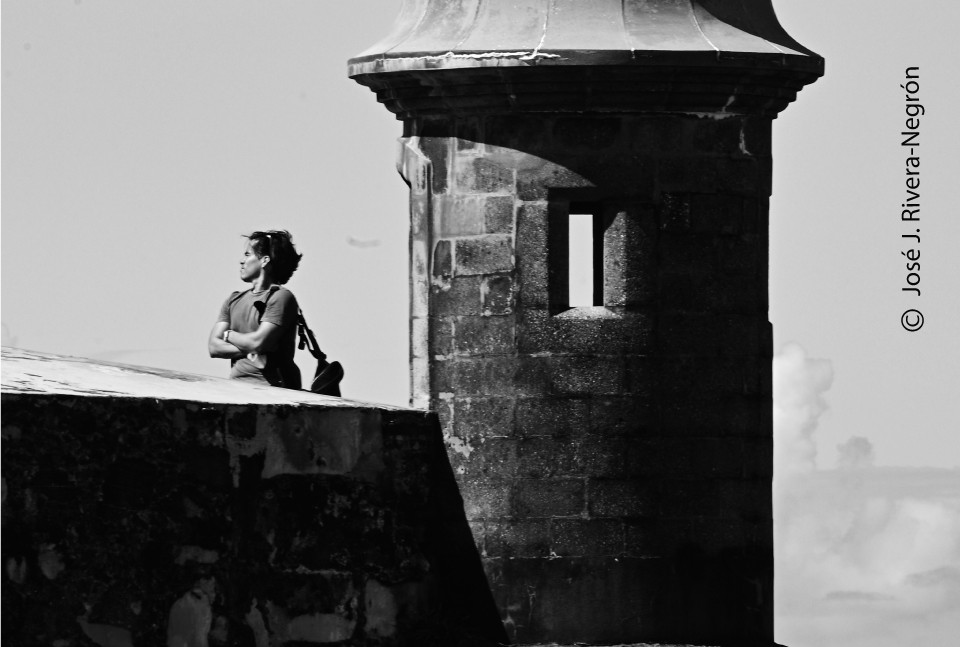
Exposure 1/60sec @ f/22 | ISO 100 | Focal Length 250mm
Jose Juniel Rivera-Negron
Born on the tropical island of Puerto Rico, Jose Juniel Rivera-Negron is a resilient artist who turned to photography as a transformative path toward personal growth and creative expression. After overcoming significant life challenges, he embraced the lens as a powerful tool to document the world and share his unique perspective on human experience. Now based in Tampa, Florida, he continues to pursue his passion for travel and photography, striving to inspire others by demonstrating that it is never too late to follow one's dreams and achieve meaningful goals.
Resonance Score Breakdown
Transparency Note: The resonance score (9.2/20) is calculated based on social engagement metrics collected before the award announcement.
Expert Photography Reviews · 3
The Weight of Stone and Salt
Why do we build walls that outlive our own names? We are creatures of soft skin and fleeting breath, yet we spend our lives stacking stone upon stone, as if the hardness of the earth could grant us a measure of permanence.
Read the reflection →The Weight of Stone
When I was seven, my grandfather took me to the old fort near the harbor. I remember the roughness of the walls against my palms, the way the stone felt cool even when the sun was trying to melt the pavement.
Read the reflection →Reviews & Comments
Share your thoughts about this award-winning photograph. Your reviews contribute to the community engagement score.
The 250mm compression flattens the spatial hierarchy, forcing the cemetery into the citadel’s shadow. It’s a rigid, claustrophobic geometry that denies the horizon its breadth. The frame holds because the masonry lines dictate the eye’s path, yet the lack of breathing room feels suffocating. I’m genuinely unsettled by how the architecture crushes the foreground. It’s a brutal, calculated arrangement of mass. The composition doesn’t invite; it demands total submission to the weight of the stone.
1/60sec at f/22, 250mm. Diffraction is the enemy here. Stopping down to f/22 on a Z50 sensor introduces significant blur, undermining the sharpness required for architectural detail. It’s a technical miscalculation. The compression is effective, but the optics are soft. I’ve spent years staring at these sensors, and it’s frustrating to see such potential lost to poor aperture selection. You’ve traded clarity for a depth of field you didn’t actually need at this distance.
The weathered stone of El Morro doesn’t just frame the scene; it anchors the soul of Puerto Rico. That compression from the 250mm lens pulls the cemetery and La Perla into a tight, suffocating embrace with the citadel. It’s a heavy, beautiful tension. I’m struck by how the architecture dictates the rhythm of life here. It’s not just a landscape; it’s a portrait of a place that refuses to let its history fade into the Atlantic.