Frozen Spider Web by Silvia Bukovac Gasevic
Captured during the crisp stillness of winter, this image highlights the intricate, delicate geometry of a frozen spider web. Lacking a dedicated macro lens, the photographer employed a creative technical solution by pairing a 50mm prime lens with an extension tube to achieve the necessary magnification. The resulting photograph transforms a fleeting, fragile natural detail into a striking study of texture and light. Its award-worthy quality lies in the photographer's ability to find profound aesthetic beauty in the overlooked, turning a simple winter morning into a compelling, crystalline composition.
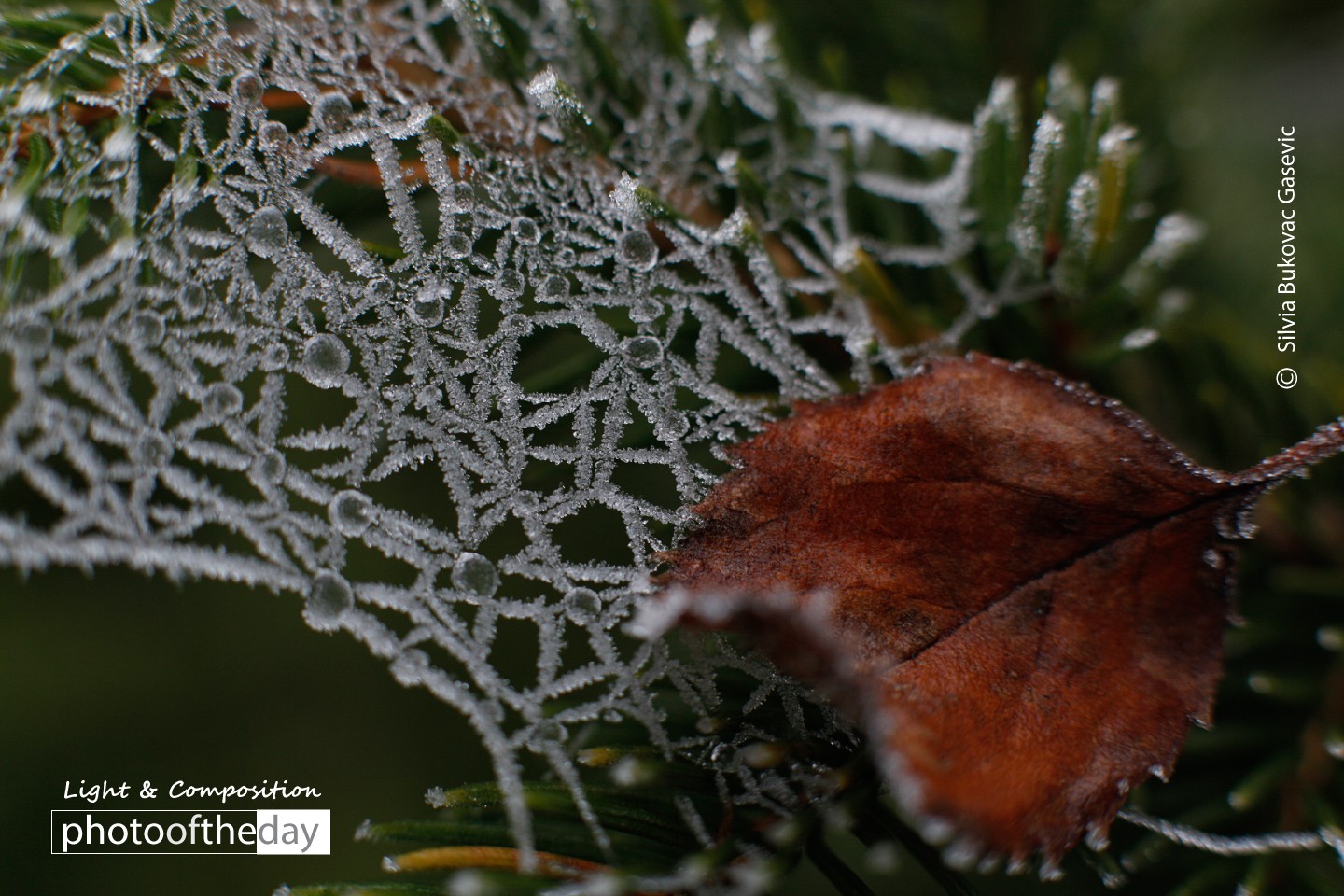
Exposure 1/100sec @ f/4 | ISO 400 | Focal Length 50mm
Silvia Bukovac Gasevic
Born in Croatia and currently based in Germany, Silvia Bukovac Gasevic is a dedicated photographer with a profound passion for nature and wildlife. Her professional career includes freelance work for three international photo agencies, driven by a constant pursuit of the perfect, aesthetically compelling moment. Whether traveling or at home, she maintains a keen eye for the beauty in her surroundings, consistently documenting the world through her lens with an artistic and observant perspective.
Resonance Score Breakdown
Transparency Note: The resonance score (9.6/20) is calculated based on social engagement metrics collected before the award announcement.
Expert Photography Reviews · 3
The Geometry of What Remains
There is a specific silence that belongs to the first frost. It is not the silence of peace, but the silence of a sudden, crystalline arrest.
Read the reflection →The Architecture of Silence
There is a quiet intelligence in the way winter demands our attention. It does not shout; it strips away the excess until only the essential structure remains.
Read the reflection →Reviews & Comments
Share your thoughts about this award-winning photograph. Your reviews contribute to the community engagement score.
Using an extension tube with a 50mm prime forces the focal plane into a razor-thin slice, pushing the glass to its absolute limit. At f/4, the diffraction of light across these frozen filaments is, in the strictest physical sense, extraordinary. I’m genuinely moved by how the bokeh renders the background into soft, icy geometry. It’s a brilliant technical workaround; she’s captured the crystalline structure of the frost with a clarity that the naked eye simply can’t resolve.
Karl Blossfeldt’s botanical studies sought the architectural soul of nature, yet Gasevic finds something more ephemeral here. By forcing a 50mm prime into macro service, she captures a crystalline geometry that recalls the delicate silver-nitrate precision of early photograms. It’s a brave, tactile choice. I’ve spent decades cataloging the natural world, but the way these frozen filaments catch the light—it actually made me catch my breath. She’s turned a winter morning into pure, structural poetry.
One suspects Gasevic didn’t just stumble upon this. Using a 50mm prime with an extension tube is a fiddly, miserable business when your fingers are numb in a Croatian winter. It’s a proper bit of improvisation. I’ve spent enough mornings shivering over frost-covered silk to know that kind of patience isn’t cheap. It’s a quiet, crystalline triumph. I find myself wanting to reach out and touch the ice, just to see if it holds.