Zero Image by Silvia Bukovac Gasevic
This photograph serves as a thoughtful exploration of bokeh, examining the delicate balance between soft, out-of-focus backgrounds and a sharply defined subject. The image features the photographer's cherished wooden pinhole camera, the Zero Image, capturing the essence of traditional craftsmanship through a modern lens. By focusing on the interplay of light and depth, the photographer demonstrates a keen eye for technical precision and artistic composition. The image stands out for its intentionality, transforming a simple technical exercise into a compelling study of form and aesthetic harmony that highlights the beauty of the camera obscura process.
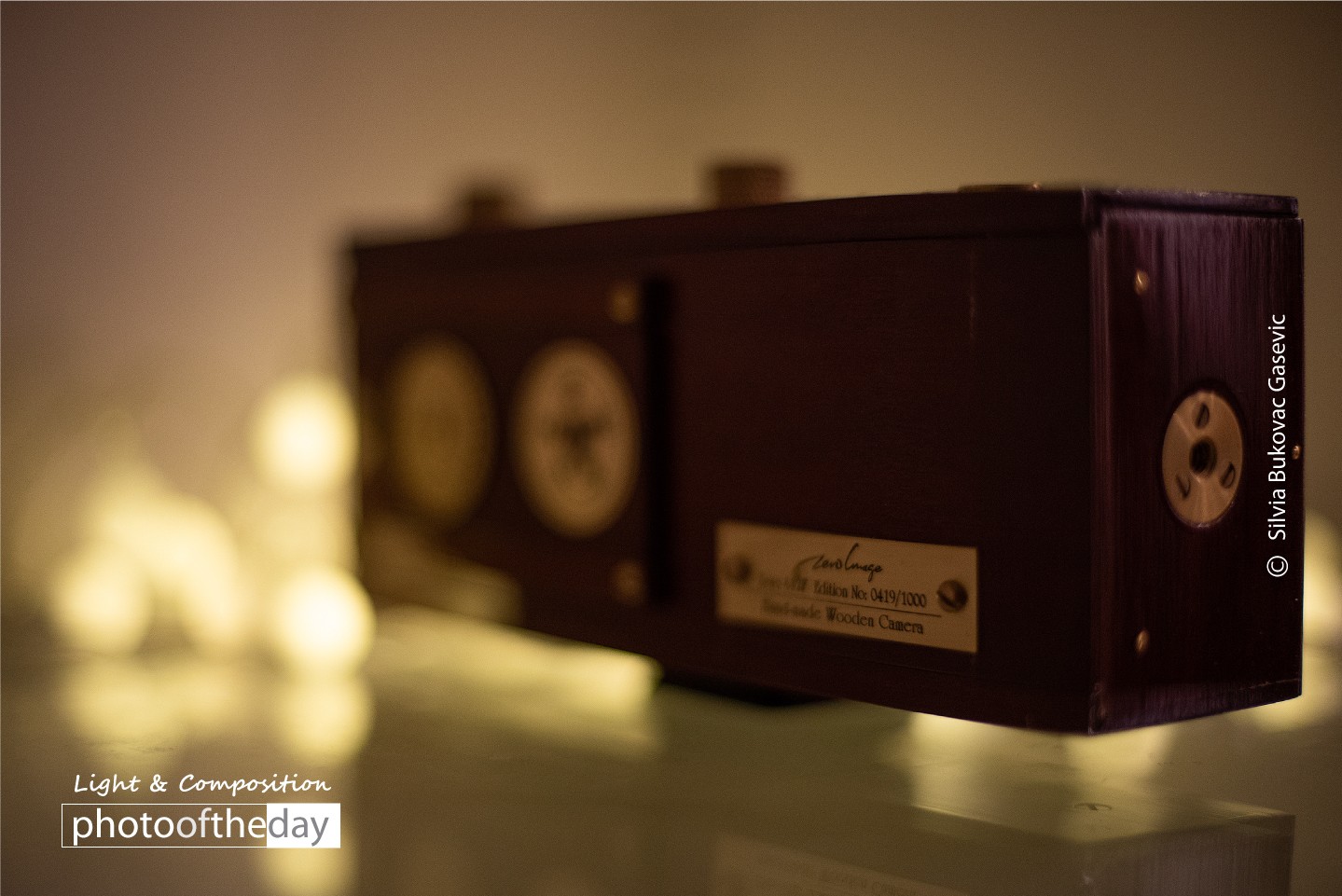
Exposure 1/250sec @ f/1.4 | ISO 1400 | Focal Length 50mm
Silvia Bukovac Gasevic
Born in Croatia and currently based in Germany, Silvia Bukovac Gasevic is a dedicated photographer with a profound passion for nature and animal life. She balances her creative pursuits while working as a professional freelancer for three international photo agencies. Driven by a constant search for aesthetic beauty in the everyday, she carries her camera everywhere, perpetually striving to capture the perfect, fleeting moment through her lens.
Resonance Score Breakdown
Transparency Note: The resonance score (9.7/20) is calculated based on social engagement metrics collected before the award announcement.
Expert Photography Reviews · 7
The Grain of Time
There is a specific grit to old wood, a dry, splintered resistance that catches the pad of the thumb. I remember the smell of my grandfather’s workshop—not just sawdust, but the deep, resinous scent of cedar that seemed to hold the heat of the sun even in the dead of winter.
Read the reflection →The Weight of a Witness
I keep a small, brass key in a velvet-lined box, though I have long since forgotten which door it once opened. It is heavy for its size, cold to the touch, and carries the faint, metallic scent of a time when locks were sturdy and secrets were kept behind iron.
Read the reflection →Reviews & Comments
Share your thoughts about this award-winning photograph. Your reviews contribute to the community engagement score.
The wooden grain meets the blur. It’s a quiet collision. I’ve spent minutes watching the light dissolve into that soft, amber haze. It doesn’t demand attention. It simply exists. The depth of field is a breath held in the dark. Nothing here is accidental. The empty corner is not empty. It’s a pause. I find my own pulse slowing down just looking at it. It’s rare to find such stillness in a frame.
It’s a meta-commentary on the medium’s evolution. By rendering the Zero Image pinhole camera with the shallow depth of field of a modern 50mm f/1.4 lens, Gasevic forces a dialogue between the camera obscura’s infinite focus and our contemporary obsession with bokeh. I’ve spent decades tracing this lineage, yet the way she frames the wooden grain against that creamy, digital blur genuinely thrills me. It’s a clever, tactile bridge between two centuries of optical obsession.
The Zero Image’s geometry relies on a shallow depth of field that compresses the frame into two distinct planes. The wooden body sits on a diagonal vector, creating a sharp 1:4 ratio between the focused grain and the blurred bokeh. I’m genuinely captivated by how the circular aperture shapes the background light into soft, floating spheres. It’s a perfect spatial equation; the lens doesn’t just capture an object, it solves the tension between solid form and ethereal space.
Most photographers treat bokeh as a crutch, but here, the shallow depth of field at f/1.4 forces a confrontation with the Zero Image’s tactile grain. It’s a quiet, honest tribute to the tools that built our craft. I’ve seen thousands of gear shots, yet this one lingers because it doesn’t just display a camera; it respects the history held within the wood. It’s a rare, enduring reminder that even in a digital age, we still crave the physical.
You’ve turned your lens on your own tools, and there’s a quiet reverence in that. I’ve spent years chasing stories in the street, but looking at this wooden Zero Image, I feel a sudden, sharp nostalgia for the simplicity of a dark box. You didn’t just capture a camera; you captured the weight of the craft. It’s honest. You waited for the light to settle just right. I respect that focus. It’s a beautiful, tactile truth.
There’s a quiet, tactile honesty here. By turning the lens on her own wooden pinhole camera, Silvia isn’t just playing with bokeh; she’s documenting the tool that defines her vision. It’s a portrait of an object that’s clearly loved, worn by time and intention. I find myself wanting to run my fingers over that grain. It’s rare to see a photographer treat their gear with such tenderness. This face has a whole life in it.
A wooden pinhole camera staring back at me. It’s a meta-moment, a tool looking at its own shadow. The bokeh is creamy, sure, but is it alive? Winogrand would’ve waited for a passerby to disrupt that stillness. It’s technically sharp, but it lacks the street’s heartbeat. I’m left wanting the chaos of Brussels, not just the gear. One tenth of a second later and the light might have told a story. It’s pretty, but is it urgent?