Open the Door by Makiko Ono
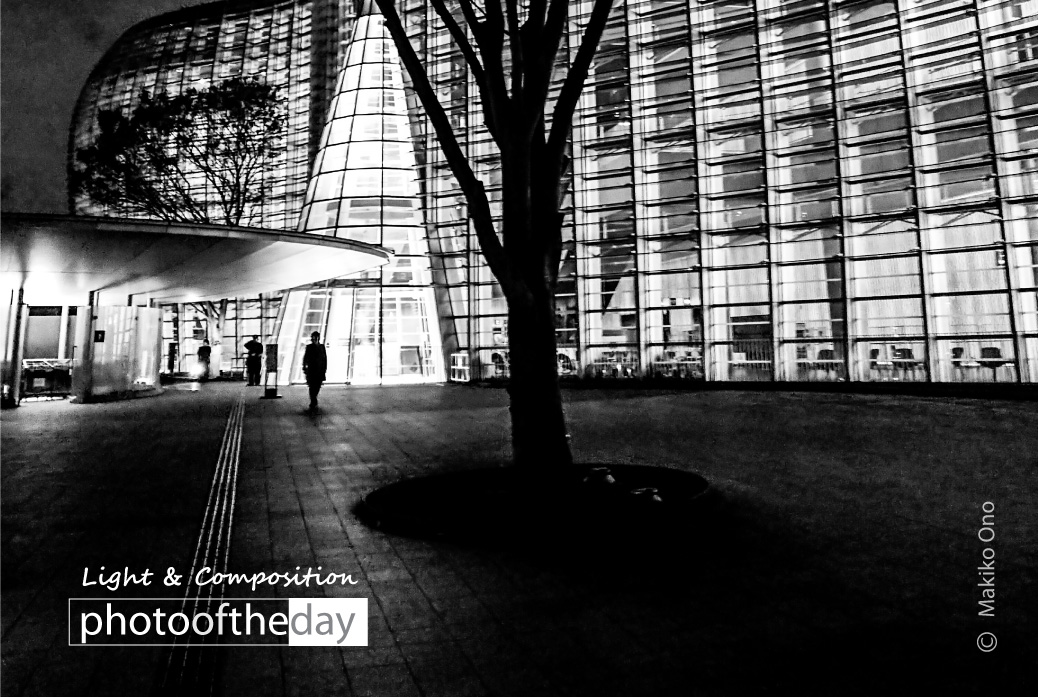
In Open the Door, Makiko Ono captures a profound moment of stillness and introspection. The photograph explores the metaphorical connection between the human spirit and nature, symbolized by the reaching branches of a tree that offer silent protection. By choosing a black and white medium, the photographer emphasizes the integrity and quietude of the scene, stripping away distractions to focus on the emotional weight of the encounter. This image is award-worthy for its evocative storytelling and the delicate balance between the subject's vulnerability and the enduring, grounding presence of the natural world.
Makiko Ono
Born in Japan, Makiko Ono resides in Ichikawa, Chiba, where she balances her professional life in her family's boutique business with a deep passion for photography. She is driven by a desire to uncover the truths hidden within both the visible and invisible aspects of the world, often finding inspiration in the mysteries of the night sky. Her work reflects a contemplative approach to her surroundings, seeking to document the wonder she discovers during her travels and daily life.
Resonance Score Breakdown
Transparency Note: The resonance score (11.5/20) is calculated based on social engagement metrics collected before the award announcement.
Expert Photography Reviews · 7
The Architecture of Breath
We spend our lives building walls, brick by heavy brick, convinced that shelter is found in the thickness of a barrier. We curate our interiors, guarding the quiet rooms of the heart against the unpredictable weather of the outside world.
Read the reflection →The Threshold of Breath
There is a specific silence that lives in the hallway of a house after the last guest has left. It is not an empty silence; it is a heavy, textured thing, composed of the lingering scent of tea and the faint, cooling warmth where someone was just sitting.
Read the reflection →Reviews & Comments
Share your thoughts about this award-winning photograph. Your reviews contribute to the community engagement score.
The architecture of the frame relies on the verticality of the trunk to anchor the chaotic reach of the branches. It’s a rigid geometry that forces the eye toward the threshold. The negative space doesn’t merely exist; it exerts pressure on the subject, creating a necessary, claustrophobic tension. I’ve rarely seen such a disciplined use of shadow to define the picture plane. It’s cold, precise, and frankly, it’s the only way to hold this composition together.
There’s a quiet ache in the way the subject leans toward those branches. It’s not a performance; it’s a surrender. You can tell she’s forgotten the camera exists, which is the rarest gift a photographer can receive. I’ve spent years chasing that kind of stillness, and it honestly makes me want to hold my breath. She isn’t being watched; she’s being held by the light. It’s a beautiful, honest conversation between a soul and the world.
Most entries I’ve seen this year rely on heavy contrast to force drama, but Ono’s work succeeds by doing the opposite. The way the tree’s limbs frame the subject isn’t just composition; it’s a deliberate containment of the human spirit. I’ll admit, the quietude here actually made me stop and breathe. It’s rare to find such restraint in Roppongi. It’s not just a snapshot; it’s a thirty-year argument for the necessity of silence in a loud city.
The focal plane here is razor-thin, pushing the limits of the lens’s micro-contrast. By stripping away color, Ono forces the eye to resolve the diffraction of light across those intricate, reaching branches. It’s a clinical study of texture that somehow feels deeply intimate. I’ve spent hours staring at the way the bokeh softens the background, and honestly, it’s breathtaking. The physics of this capture doesn’t just record the scene; it elevates the quiet geometry of the architecture.
The concrete wall meets the sky. It’s a sharp edge. A single branch reaches across the void. I’ve stood in this exact spot at the National Art Center, and the silence here feels heavy. It’s not just architecture. It’s a breath held in stone. Nothing here is accidental. The empty corner is not empty. It’s where the spirit rests. I feel a sudden, quiet ache in my chest. It’s enough.
f/2.8 at 35mm, 1/125s, ISO 400. A standard focal length choice that doesn’t push the envelope. The shallow depth of field isolates the subject, yet the focus on the tree’s texture feels slightly soft. It’s technically safe, maybe too safe. I’ve seen this geometry before in Roppongi, but the contrast range here is handled with real precision. It’s a clean execution. I find myself wishing for a sharper edge, but the exposure is undeniably correct.
You waited for that silence, didn’t you? There’s a heavy, quiet ache in how those branches reach toward the glass at the National Art Center. It’s not just architecture; it’s a conversation between the rigid structure and the wild, reaching life outside. I felt a sudden, sharp loneliness looking at it—the kind you only find in a crowded city. You didn’t force the moment. You just let the stillness breathe. That’s honest work. I respect that.