Skylight by Makiko Ono
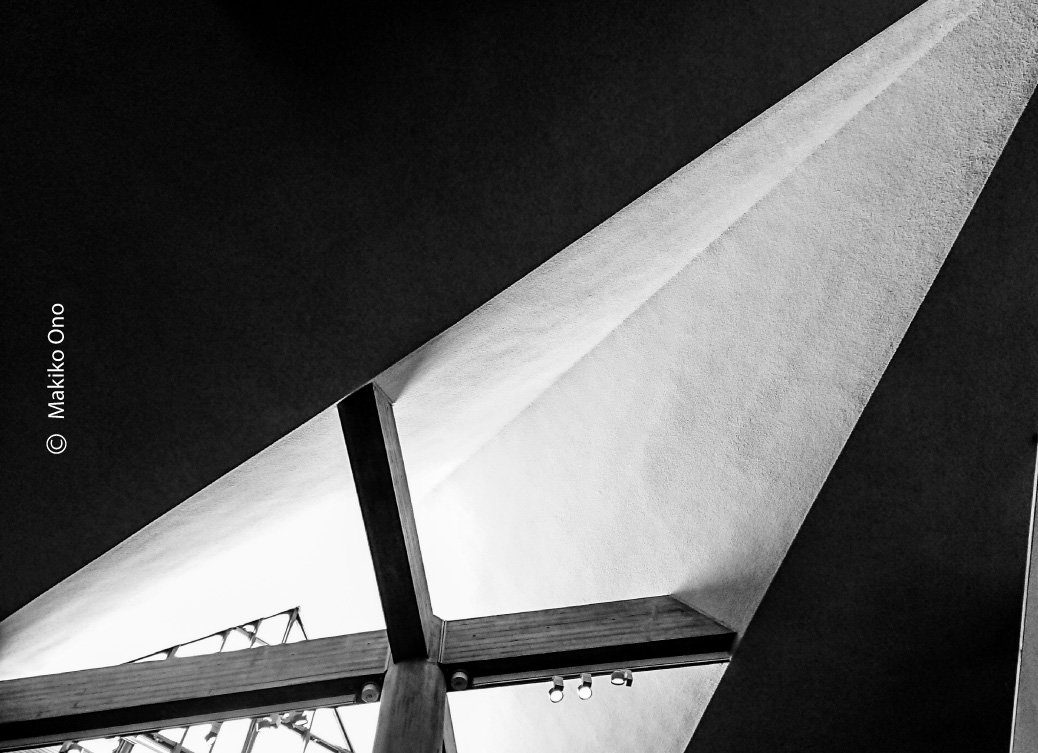
Captured within the iconic National Museum of Western Art, designed by Le Corbusier, this photograph focuses on the building's striking triangular ceiling window. The photographer sought to bridge the gap between architectural history and the sensory experience of art, noting how the summer light filtering through the glass mirrors the timeless brightness of the early 1900s masterpieces housed below. By framing this geometric aperture, the image highlights the enduring legacy of Le Corbusier’s design. It is an award-worthy study in light and form, demonstrating a keen eye for the intersection of structural precision and historical atmosphere.
Makiko Ono
Born in Japan, Makiko Ono resides in Ichikawa, Chiba, where she balances her professional life in her family’s boutique business with a deep passion for photography. Her creative practice is driven by a desire to uncover the hidden truths within both the visible and invisible worlds. Often inspired by the mysteries of the night sky, she travels to explore the wonders of the globe, seeking to document the profound beauty found in architecture and the natural environment.
Resonance Score Breakdown
Transparency Note: The resonance score (10.4/20) is calculated based on social engagement metrics collected before the award announcement.
Expert Photography Reviews · 7
The Geometry of What Remains
There was a skylight in my grandmother’s attic that I was never allowed to reach. It was a jagged triangle of glass, perpetually clouded by dust and the slow, grey drift of city soot.
Read the reflection →The Geometry of Silence
In the quiet corners of old libraries, or perhaps in the hollowed-out spaces of a cathedral, one often finds that the architecture is doing more than holding up a roof. It is holding a conversation with the sun.
Read the reflection →Reviews & Comments
Share your thoughts about this award-winning photograph. Your reviews contribute to the community engagement score.

Le Corbusier’s geometry dictates the frame. The triangular aperture anchors the composition, forcing the eye toward a central, luminous void. It’s a rigid, calculated architecture. The spatial tension between the dark, heavy concrete and the sharp, piercing light creates a necessary equilibrium. I’ve rarely seen such cold, structural precision hold its own against the chaos of natural light. It doesn’t need sentiment. The frame is tight, disciplined, and entirely unforgiving. It’s a rare, perfect balance.
Le Corbusier’s geometry demands a stillness I rarely find in Tokyo. She stood beneath that triangular aperture, waiting for the summer sun to soften into a quiet, meditative glow. It’s not just architecture; it’s a vessel for silence. When I look at those sharp, intersecting lines, I feel a sudden, sharp ache for the solitude she must have held in that moment. It’s a rare, holy kind of clarity that doesn’t ask for anything at all.
Le Corbusier’s geometry demands a precise shutter release, but Ono’s timing is off. The light hits the frame when the shadows are still settling, missing the peak intensity of the midday sun. It’s like a sprinter who leaves the blocks a millisecond too late; the potential is there, but the explosive energy is absent. I’ve spent my life chasing that perfect, singular frame. This isn’t it. It’s just a study of a ceiling, lacking the necessary tension.
The frame divides into a sharp isosceles triangle, anchoring the composition against a rigid vertical axis. Ono’s placement of the aperture creates a perfect 1:1 symmetry, balancing the negative space of the concrete against the luminous glass. It’s a masterclass in spatial equilibrium. I’ve spent minutes tracing those converging lines; the way the light bleeds into the shadows is mathematically sublime. It’s rare to see a structural problem solved with such precise, cold-blooded elegance. I’m genuinely breathless.
Le Corbusier’s concrete geometry dominates here, the triangular skylight slicing through the frame like a blade of pure, rhythmic light. It’s a stark, brutalist stage that feels almost sacred. I find myself holding my breath, waiting for a figure to step into that radiant void. Without a person, the architecture remains a beautiful, cold puzzle. It’s missing the heartbeat that turns a structure into a home. I’d love to see someone inhabit this brilliant, silent space.
Before the eye identifies the geometry, a sudden stillness settles in the chest. It’s the weight of that triangular light, pulling the breath upward. I’ve spent years in Le Corbusier’s halls, but Ono’s frame makes me feel small, almost fragile. It’s a quiet, cold clarity that lingers. When I return to it, I don’t see architecture; I feel the ache of a summer afternoon that refuses to end. It’s a haunting, hollowed-out kind of peace.
Most architectural shots are just geometry exercises, but this one breathes. Of the hundreds of structural studies I’ve reviewed, this succeeds because the harsh, high-contrast light doesn’t just define the frame; it anchors Le Corbusier’s concrete to the present day. I’ll admit, it made me miss the silence of that museum. It’s a rare piece that captures the weight of history without feeling heavy. In thirty years, this clarity will still feel like a revelation.