The New Year by Moslem Azimi
Captured during the vibrant Newrooz celebrations, this photograph documents the arrival of the Kurdish New Year, a day symbolizing renewal and the first day of spring. The image captures the essence of the festival, where communities gather to ignite ceremonial fires and perform traditional Kurdish dances. By focusing on these deeply rooted cultural rituals, the photographer preserves a moment of profound communal joy and heritage. The photograph is award-worthy for its authentic portrayal of Kurdish life, effectively translating the energy and significance of this ancient tradition into a compelling visual narrative that resonates with viewers globally.
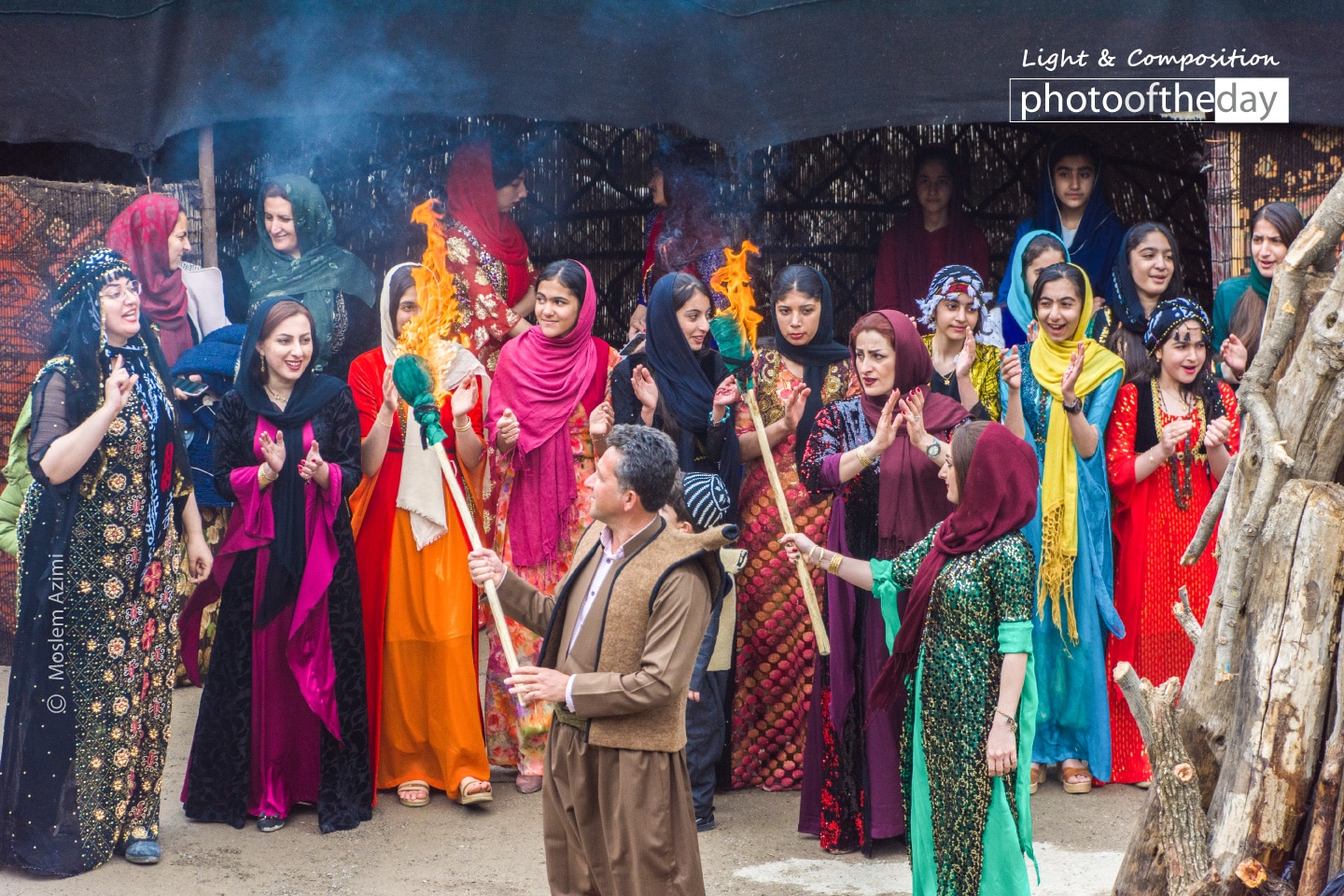
Moslem Azimi
Moslem Azimi is an Iranian photographer of Kurdish origin based in Javanrud, Kermanshah Province. Although he holds a Bachelor of Arts in English Translation, he is a self-taught photographer who has cultivated his craft through active participation in numerous photography groups. His work has been featured in both national and international exhibitions, driven by a dedicated mission to document the unique lifestyle, traditions, and cultural heritage of the Kurdish people.
Resonance Score Breakdown
Transparency Note: The resonance score (10.4/20) is calculated based on social engagement metrics collected before the award announcement.
Expert Photography Reviews · 5
The Fire That Remains
Winter is a long holding of breath. We wait for the thaw, for the moment the earth decides to soften, for the ice to lose its grip on the stone. There is a hunger in us that only warmth can satisfy.
Read the reflection →The Ember in the Air
I often think that the most important things we build are not made of stone or steel, but of heat and shared breath.
Read the reflection →Reviews & Comments
Share your thoughts about this award-winning photograph. Your reviews contribute to the community engagement score.
The fire flares, a sudden jump cut into the night. It’s kinetic, frantic, the shutter speed catching the embers mid-flight like sparks from a dying projector bulb. I’m breathless watching the dancers blur; it’s a sequence frozen in a single, violent frame. Azimi didn’t just document a ritual, he captured the rhythm of the flame itself. I’d give anything to have been standing there, feeling that heat on my skin. It’s pure, unedited cinema.
Most documentary work here feels suffocatingly sharp, but Azimi’s blur during the Newrooz dance is a relief. It’s closer to the kinetic energy of a Francis Bacon study than a standard travelogue. I’m genuinely moved by how he chose not to resolve the dancers’ faces; the motion smear captures the spirit of the fire better than any static shutter speed could. Why resolve the individual when the ritual is about the collective pulse? It’s brilliant.
In Paveh, the firelight dances across faces etched with the weight of winter. We look at these Kurdish revelers and we understand that renewal isn’t just a season; it’s a communal breath. Moslem Azimi didn’t just point a lens; he waited for the rhythm of the dance to reveal their history. I’m moved by the warmth in their eyes—it’s a quiet, fierce joy. This is a photograph that asks to be returned to, again and again.
The composition hinges on a dynamic diagonal formed by the dancers’ linked arms, slicing the frame into a 3:5 ratio of kinetic energy against static earth. The fire acts as a central pivot point, grounding the chaotic vectors of the circle. I’m genuinely moved by how the circular motion resolves the frame’s tension. It’s a perfect geometric loop; the dancers’ rhythmic spacing creates a balanced equation of communal joy that feels mathematically inevitable. It’s brilliant.
The firelight in Paveh flickers against a sky that’s seen empires rise and fall. While the sensor struggles with the noise floor of the shadows, the warmth of these Kurdish dancers feels like a heartbeat against the cold, ancient vacuum of space. It’s a fragile, beautiful defiance. I’ve spent my life measuring the distance to dying stars, but seeing this communal joy, I’m reminded that we’re the only ones here to watch the light arrive.