Preparing Food by Jabbar Jamil
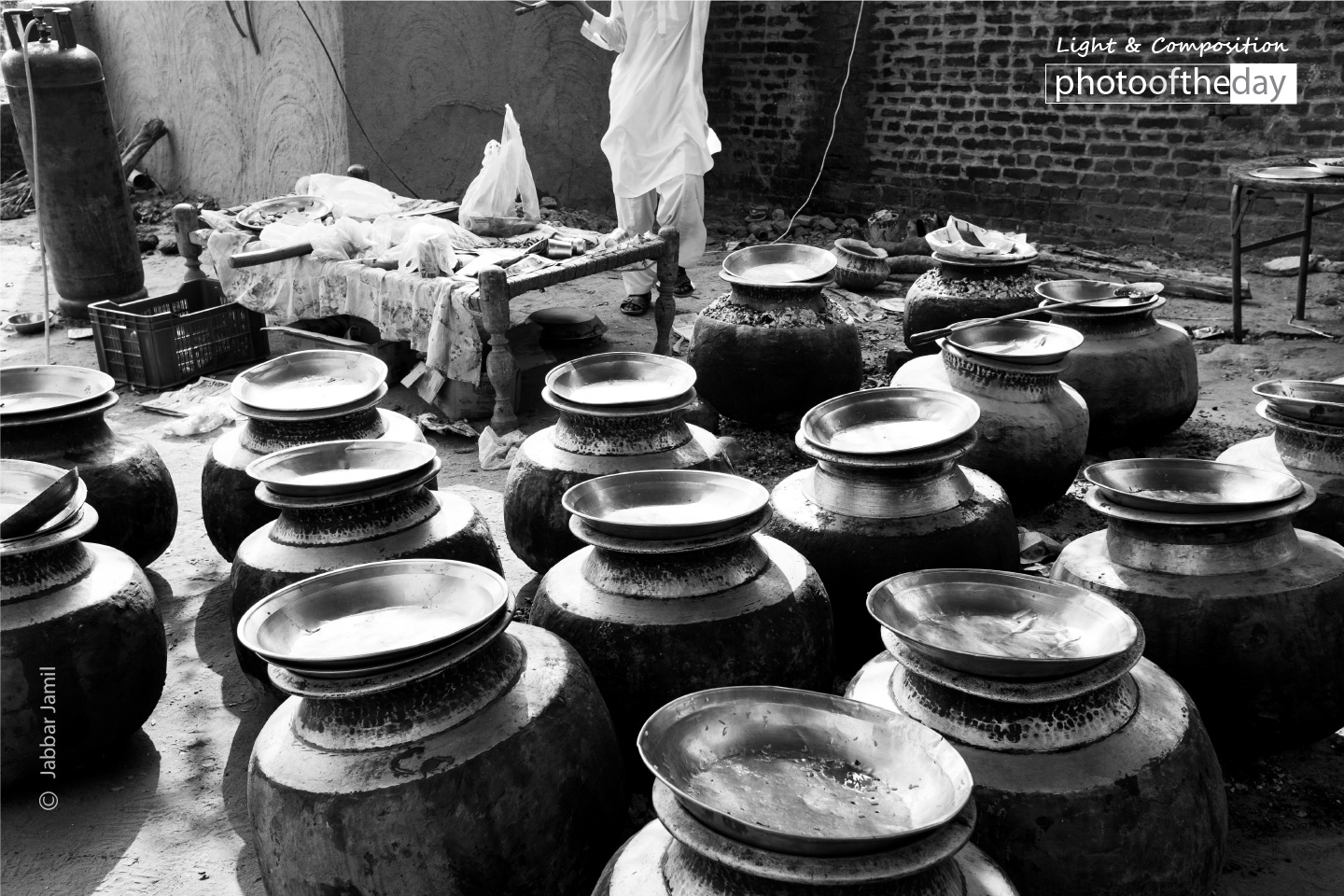
Captured during a traditional village wedding in Sialkot, this image documents the communal spirit of rural life. The photographer focused on the authentic process of outdoor cooking, where large pots are used to create flavors distinct from modern methods. The scene highlights the collective effort of the community as they prepare for the festivities. This photograph is award-worthy for its raw, documentary quality and its ability to elevate a simple, everyday task into a compelling visual narrative that speaks to cultural heritage and the beauty of human connection.
Jabbar Jamil
Based in Sialkot, Pakistan, Jabbar Jamil is a dedicated street photographer who uses his lens to bridge the gap between himself and the outside world. By stepping outside his comfort zone, he captures the unfiltered reality of his surroundings, finding that photography serves as both a creative outlet and a vital form of stress relief. His work is characterized by a commitment to documenting life as it truly appears, focusing on the human connections found within the streets of his home country.
Resonance Score Breakdown
Transparency Note: The resonance score (11.8/20) is calculated based on social engagement metrics collected before the award announcement.
Expert Photography Reviews · 4
The Weight of the Feast
I burned the toast this morning. It was a small, stupid mistake, but it felt like a failure of attention. I was distracted, thinking about the grocery list and the pile of laundry, and suddenly the kitchen was filled with that sharp, acrid smell of charred bread.
Read the reflection →The Mycelium of the Hearth
When a forest floor is disturbed, the mycelium beneath the soil begins a silent, rapid expansion, knitting together the roots of disparate trees to share nutrients and information across the woodland.
Read the reflection →Reviews & Comments
Share your thoughts about this award-winning photograph. Your reviews contribute to the community engagement score.
You waited for the steam to catch that sliver of light, and I can feel the heat radiating off those pots. It’s not just about cooking; it’s about the weight of the ladle and the rhythm of the work. I’ve stood in kitchens like this, and you’ve captured the exact moment the labor becomes a ritual. There’s something honest happening here. You didn’t just document a wedding; you found the soul of the village.
The frame pivots on a rigid vertical axis formed by the central figure’s posture, balancing the heavy, circular mass of the cooking vessel against the negative space of the background. It’s a perfect study in triangular tension; the arms create vectors that pull the eye toward the steam’s chaotic geometry. I’m genuinely moved by how the steam’s soft diffusion resolves the scene’s harsh angularity. It’s a beautifully solved spatial equation, turning manual labor into pure, rhythmic form.
There’s a frantic energy in these hands that makes me uneasy. In the wild, I’ve learned that when a subject is this close, you’re either invisible or you’re an intruder. Here, the proximity feels extracted, not earned through the quiet patience I demand. It’s a chaotic scene, lacking the stillness required to truly honor the labor. I find myself wanting to step back, to let these people work without the lens forcing their intimacy.
Before the eye identifies the steam rising from those heavy pots, something in the chest settles. It’s the rhythm of communal labor that catches me; I feel the heat of the fire against my own shins. When I return to this a year later, the silence of the village lingers. It’s not just cooking; it’s the weight of shared purpose. I’ve found myself craving that specific, dusty warmth whenever the world feels too cold.