Through the Gate View by Ryszard Wierzbicki
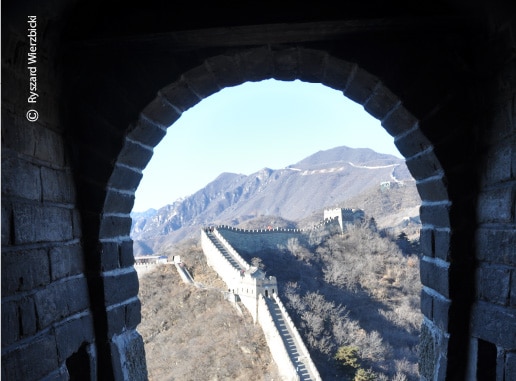
Through the Gate View captures the timeless grandeur of the Mutianyu section of the Great Wall of China. By framing the ancient stone fortifications through a weathered architectural archway, the photographer creates a compelling sense of depth and historical perspective. The composition highlights the contrast between the intricate, man-made masonry and the sprawling, mountainous landscape beyond. This image is award-worthy for its masterful use of framing, which invites the viewer to step into the past, effectively balancing the structural complexity of the Ming Dynasty ruins with the serene, expansive atmosphere of the surrounding Chinese countryside.
Ryszard Wierzbicki
Born in 1963, Ryszard Wierzbicki is a dedicated traveler and photographer currently based in Swindon, United Kingdom. After a diverse career in education and marketing, he transitioned into a life of exploration, focusing his lens on the landscapes and cultures of South-East Asia. His work is deeply informed by his extensive background in scuba diving and his commitment to humanitarian efforts, including volunteering for orphanages in Thailand and Burma. Through his platforms, Instant Travelling and World Around, he shares his passion for documenting the world's hidden corners.
Resonance Score Breakdown
Transparency Note: The resonance score (13.1/20) is calculated based on social engagement metrics collected before the award announcement.
Expert Photography Reviews · 7
The Weight of Ancient Stone
The smell of damp earth after a long rain always brings me back to the feeling of rough, cold granite against my palms. It is a grit that stays under the fingernails, a reminder that some things were built to outlast the soft, fleeting warmth of human skin.
Read the reflection →Framing the Quiet
I spent this morning trying to fix a loose hinge on my kitchen cabinet. It was one of those small, nagging tasks that I had been putting off for weeks.
Read the reflection →Reviews & Comments
Share your thoughts about this award-winning photograph. Your reviews contribute to the community engagement score.
Framing the Great Wall through that crumbling archway is a classic trope, yet Wierzbicki avoids the postcard trap by locking onto the texture of the stone. Most entries this year relied on wide, hollow vistas; this one forces a claustrophobic intimacy that makes the history feel heavy. I’ve stared at this for ten minutes, and it still makes me ache to touch that grit. It’s a rare, grounded perspective that will actually endure decades from now.
The archway holds the mountain. It’s a frame that doesn’t demand, but invites. I’ve spent minutes staring at the stone threshold. It’s quiet here. The wall recedes into the mist, leaving room for the breath to settle. Nothing here is accidental. The empty corner is not empty. It’s a pause. I feel a sudden, sharp ache for that silence. Wierzbicki knows the weight of what he’s left out. It’s enough. It’s everything.
Before the eye identifies the stone, something in the chest tightens. The archway acts as a physical constraint, forcing a held-breath moment before the landscape spills out. It’s claustrophobic, then vast. I’ve returned to this frame three times today, and each time, the weight of that masonry feels heavier against my own pulse. It’s not just a wall; it’s a threshold. Looking at it, I feel a strange, quiet ache for a history I never lived.
Framing the Great Wall through that jagged aperture feels like peering into a tomb. It’s not just stone; it’s a barricade against the void. I’m unsettled by how the darkness of the arch swallows the horizon, forcing the light to beg for entry. It’s a claustrophobic beauty that refuses to let the landscape breathe. When I look at those shadows, I don’t see history—I see the silence of a civilization that’s forgotten how to speak.
Framing the Great Wall through that archway is technically sound, but it leaves me cold. Where’s the life? I’ve spent weeks in mountain passes waiting for a snow leopard to blink, and I know the difference between a landscape that breathes and one that’s just a postcard. It’s a sterile view. Without a single bird or creature stirring in those hills, it feels like a hollow stage set. I’d trade this perfect composition for one wild heartbeat.
We look through this weathered archway and we aren’t just seeing stone; we’re hearing the silence of those who built it. It’s a portrait of a landscape that has outlived its makers. I feel a strange, heavy ache in my chest when I trace those jagged ridges. Ryszard didn’t just frame a wall; he listened to the mountain’s long memory. It’s a photograph that asks to be returned to, again and again.
The stone archway here isn’t just a frame; it’s a threshold. Ryszard waited for that flat, diffused light to soften the Ming masonry, letting the wall breathe against the distant, hazy peaks. I’ve spent enough mornings on these ridges to know the silence he felt while the shutter clicked. It’s a quiet, heavy stillness. Looking at the way the light clings to the weathered stone, I feel a sudden, sharp ache for that ancient, lonely horizon.