Leave a Reply
Want to join the discussion?Feel free to contribute!

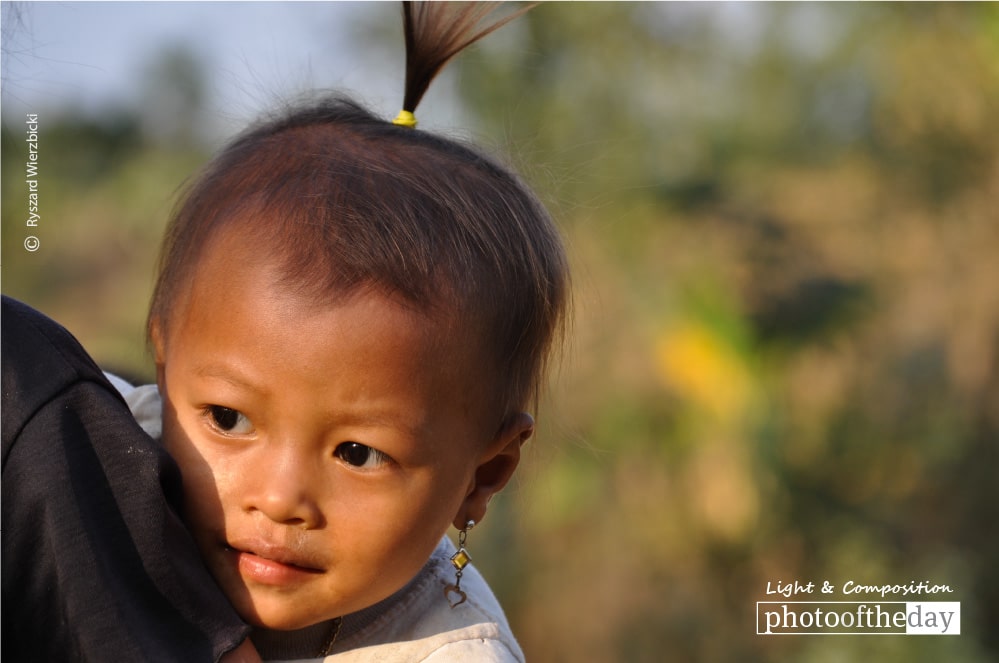
Captured in the remote village of Ngng Khiaw, Laos, this candid portrait highlights the photographer's genuine connection with local children. Drawn to the responsibility older siblings bear for their younger counterparts while parents work the rice fields, the photographer utilized a 123.4mm focal length to isolate the subject. The interaction was marked by mutual curiosity, as the children were fascinated by the sight of a camera—a rare object in their community. The image is award-worthy for its authentic emotional resonance and the photographer's ability to bridge cultural divides through the simple, shared joy of viewing digital photographs together.
Born in Poland in 1963, Ryszard Wierzbicki holds a Master’s degree in Social Sciences and spent years working in child care and marketing before transitioning to a life of exploration. After moving to the United Kingdom in 2006, he dedicated himself to traveling, scuba diving, and photography, with a particular focus on South-East Asia. A passionate volunteer for orphan charities, he also founded the travel and photography forums Instant Travelling and World Around to foster community among global explorers.
Transparency Note: The resonance score (11.6/20) is calculated based on social engagement metrics collected before the award announcement.
In the quiet corners of a house, one often finds the most profound architecture of care. It is rarely grand.
Read the reflection →Why do we assume that childhood is a season of lightness, a time unburdened by the gravity of the world? We look at the young and see only the potential for flight, forgetting that they are often the anchors of their own small communities.
Read the reflection →
 The Weight of Bare Feet
Share your thoughts about this award-winning photograph. Your reviews contribute to the community engagement score.