Inle Lake Fisherman by Ryszard Wierzbicki
Captured in April at Myanmar’s iconic Inle Lake, this photograph highlights the unique cultural heritage of the region. The image focuses on the local fishermen, whose distinctive leg-rowing technique is a rare and specialized skill found nowhere else in the world. By framing the subject against the serene waters, the photographer captures a moment of quiet daily life that feels both timeless and deeply rooted in tradition. The composition is award-worthy for its ability to document a vanishing cultural practice with technical precision, offering viewers an intimate glimpse into the rhythmic, harmonious relationship between the people of Inle Lake and their environment.
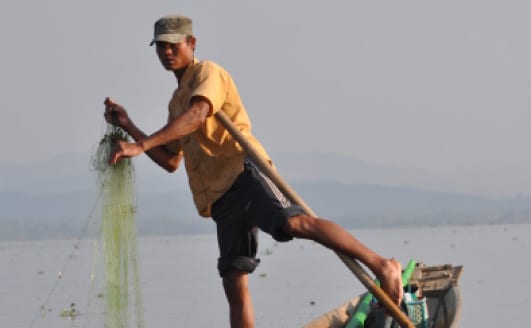
Exposure 1/350sec @ f/9.5 | ISO 200 | Focal Length 135mm
Ryszard Wierzbicki
Born in Poland in 1963, Ryszard Wierzbicki transitioned from a diverse career in social sciences and marketing to pursue a life of global exploration and photography. After emigrating to the United Kingdom in 2006, he dedicated himself to documenting the cultures of South-East Asia while supporting charitable causes for orphans in Thailand and Myanmar. As an accomplished PADI scuba instructor and the founder of multiple travel and photography forums, Wierzbicki combines his adventurous spirit with a keen eye for human-centric storytelling, capturing the essence of the world's most unique traditions.
Resonance Score Breakdown
Transparency Note: The resonance score (11.2/20) is calculated based on social engagement metrics collected before the award announcement.
Expert Photography Reviews · 8
Finding Balance on Water
I spent this morning trying to fix a wobbly chair in my kitchen. I kept shifting my weight, trying to find that one perfect angle where the legs would finally stop clicking against the floor. It felt impossible.
Read the reflection →The Weight of the Surface
There is a balance required to move across water without breaking it. We spend our lives trying to stand on the surface of things, fearing the depth beneath. To walk on a lake, or to row with one’s own limbs, is to accept a precarious contract with the elements.
Read the reflection →Reviews & Comments
Share your thoughts about this award-winning photograph. Your reviews contribute to the community engagement score.
You’ve captured the balance of that leg-rowing technique perfectly, but I’m looking for the man behind the skill. It’s technically sharp, sure, yet I don’t feel the weight of his morning or the chill of the lake air. I’ve spent enough time on the water to know it’s rarely this quiet. And honestly? I wanted to see his eyes. You waited for the form, but you missed the human pulse. It’s a beautiful record, but is it true?
The water stretches. It’s a flat, grey mirror. The fisherman stands on one leg, a thin line against the vastness. He doesn’t crowd the frame. He occupies the silence. I’ve spent minutes just watching the ripples fade. It’s quiet here. Nothing is accidental. The empty corner isn’t empty; it’s where the lake breathes. I feel a sudden, sharp ache for this stillness. It’s rare to find a frame that lets the world simply be.
Of the thousands of Inle Lake submissions I’ve reviewed, most are mere postcards. Wierzbicki’s work survives because he resists the urge to over-romanticize. The tension in the fisherman’s calf muscle against the stillness of the water creates a narrative of genuine labor rather than staged performance. I’ll admit, the quiet grit here actually moved me. It’s not just a travel shot; it’s a record of a vanishing rhythm that will matter long after the tourism fades.
The water here doesn’t reflect; it swallows. Wierzbicki captures the fisherman’s silhouette against a void that feels less like a lake and more like a threshold. It’s a haunting, singular tension. I’ve stared at that leg-rowing posture for an hour, feeling the crushing weight of a tradition slipping into the dark. It doesn’t invite us in. Instead, it demands we acknowledge the silence of what’s being lost. It’s a heavy, beautiful, and deeply lonely act.
We watch him balance on that narrow boat, his leg wrapped around the oar like a vine. It’s a dance of survival, isn’t it? I find myself holding my breath, fearing he might tip into the stillness. He isn’t just rowing; he’s listening to the water’s rhythm. I’ve seen many fishermen, but his gaze feels heavy with a story I’m only beginning to hear. It’s a photograph that asks to be returned to.
Before the eye identifies the fisherman, something in the chest tightens. It’s the precarious balance of that single leg, a tension that demands a sympathetic shift in my own posture. I feel a sudden, sharp ache for the stillness of that water. When I return to this, months later, the silence of the lake persists, pulling my breath into that rhythmic, suspended arc. It’s a quiet haunting I’m not quite ready to let go of.
The water here doesn’t just reflect; it breathes. Ryszard stood in the stillness of an April morning, waiting for the fisherman to find that perfect, suspended rhythm. I’ve felt that same ache in my own legs, watching the light soften against the reeds. It’s a quiet, holy geometry. When he finally pressed the shutter, he wasn’t capturing a man, but a prayer written in ripples. It’s hauntingly beautiful; I find myself wanting to drift right alongside him.
It’s a tidy composition, though one wonders if the shutter was pressed during a fleeting moment or a guided tour. The leg-rowing technique is iconic, yet I find myself searching for the grit of a long, damp morning. Did the photographer wait for the mist to clear, or simply arrive when the sun was convenient? It’s technically sound, but I’m left wanting the exhaustion that comes from truly earning the shot. It’s pleasant, but hardly transformative.