Tale of Old Dhaka by Yasef Imroze
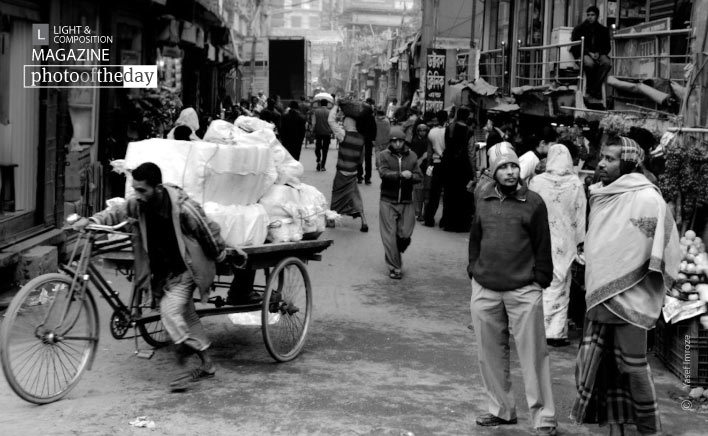
In this evocative capture of Old Dhaka, the photographer documents the relentless vitality of a city that refuses to pause, even on the year's coldest days. By focusing on the interplay between narrow, congested alleyways and the bustling street life, the image serves as a window into a hidden treasure of human resilience. The technical decision to use a 35mm focal length at f/10.0 allows for a deep, immersive perspective that balances the architectural density with the candid movement of the locals. This photograph is award-worthy for its authentic storytelling and its ability to transform a chaotic urban environment into a poignant, rhythmic visual narrative.
Yasef Imroze
Originally from Dhaka, Bangladesh, Yasef Imroze Ifaz is currently pursuing undergraduate studies at Macquarie University in Sydney, Australia. A passionate photographer who views the medium as a transformative lens through which to perceive nature and humanity, he specializes in capturing the essence of landscapes and street life. His work is driven by a deep sense of joy and a commitment to documenting the vibrant, ever-changing stories of the people and places he encounters.
Resonance Score Breakdown
Transparency Note: The resonance score (13.4/20) is calculated based on social engagement metrics collected before the award announcement.
Expert Photography Reviews · 4
The Echo of Footsteps
I took a different route home this afternoon, mostly because I wanted to avoid the construction noise on my usual street.
Read the reflection →The Architecture of Breath
History is not a book kept on a shelf; it is a sediment, a layering of dust and footsteps that settles into the cracks of our daily lives.
Read the reflection →Reviews & Comments
Share your thoughts about this award-winning photograph. Your reviews contribute to the community engagement score.
Most street photography from Dhaka is just noise, but this frame holds its own. The f/10 depth keeps the crumbling brickwork as sharp as the faces, forcing a confrontation between history and the living. I’ve stared at these alleyways for hours, and it’s the way the light catches the dust that gets me—it feels like breathing in that heat. It’s not just a scene; it’s a record of a pulse that won’t stop beating.
At f/10, the D7000’s sensor captures the alley’s architectural density with impressive depth. By stopping down, Imroze avoids the diffraction limit while ensuring the focal plane encompasses both the foreground textures and the distant, chaotic movement. It’s a calculated optical choice. I’m genuinely moved by how the light refracts off those weathered surfaces; it’s a rare, tactile clarity that makes me feel the grit of Dhaka’s streets against my own skin. It’s technically precise and hauntingly alive.
The frame’s geometry is suffocated by the density of the alleyway. The vertical lines of the architecture provide a necessary anchor, yet the chaotic movement of the figures threatens to collapse the picture plane. It’s a precarious balance. The f/10 aperture keeps the depth of field sharp, but the visual weight feels unevenly distributed. I’m genuinely exhausted by the clutter. It doesn’t quite hold. The composition lacks the structural discipline required to contain such frantic energy.
One suspects Imroze spent a good while dodging rickshaws in these suffocating alleys before the frame finally settled. At f/10, he’s demanded we look at every crumbling brick and weary face. It’s a gritty, claustrophobic affair, and I’ve felt that specific humidity in my own bones. He didn’t just stumble upon this rhythm; he stood there until the chaos made sense. It’s an earned piece of work, and that’s rare enough these days.