The Architecture of Gravity
In the physics of childhood, the ground is merely a suggestion. We spend our early years testing the limits of our own weight, jumping from low walls or balancing on the thin, uncertain line of a curb, convinced that if we move fast enough, we might just outrun the pull of the earth. It is a strange, defiant sort of faith. As we grow older, we learn to walk with a heavier, more cautious tread, trading that airborne ambition for the safety of solid pavement. We forget the thrill of the suspension, that brief, miraculous second where the body exists between the push and the landing. We become creatures of the horizontal, tethered by the mundane necessity of staying upright. Yet, there remains a quiet, persistent ache in the joints for that lost buoyancy, a memory of when we believed that gravity was something we could negotiate with, rather than a law we were forced to obey. What is it that makes us look up, even now, when we hear the sudden, rhythmic clatter of wheels against concrete?
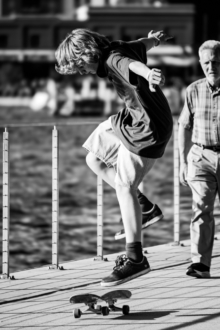
Jose Juniel Rivera-Negron has captured this fleeting defiance in his work titled The Skater Boy. It serves as a reminder that even in the middle of a crowded city, one can still find a way to briefly leave the ground behind. Does the pavement feel any different when you are hovering just above it?