The Architecture of Flight
Pigeons possess an internal magnetic compass, a biological map that allows them to navigate vast, unfamiliar territories and return to the exact coordinates of their roost. They do not merely fly; they weave themselves into the geography of a place, turning stone and sky into a singular, living watershed. We often view our own lives as static, tethered to the ground by the weight of our possessions and the rigidity of our routines. Yet, there is a profound human hunger to be untethered, to find that same instinctual rhythm that allows a creature to belong to the air as much as it belongs to the earth. We build our homes out of permanence, carving our histories into the bedrock, forgetting that the most enduring structures are those that allow for movement, for the constant, fluttering pulse of departure and return. If we could map our own internal migrations, would we find ourselves circling back to the same quiet places, or are we still searching for the coordinates of our own true north?
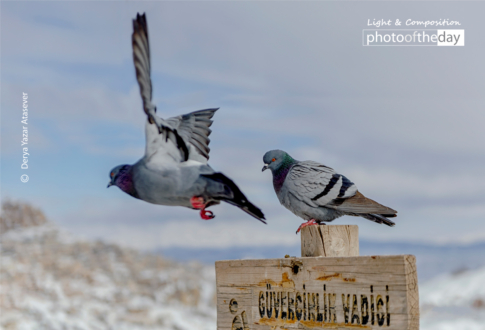
Derya Yazar Atasever has captured this sense of movement in the beautiful image titled Pigeon Valley. The way the birds animate the ancient stone reminds me that no landscape is ever truly still. Does this view make you feel like you are standing on the ground, or are you flying with them?