The Weight of Stone
Walls do not hold memory; they only hold the space where memory once lived. We build in brick and mortar, believing we are anchoring ourselves against the erosion of time. We carve our names, we stack our stones, and we wait for the future to acknowledge us. But the stone is indifferent. It knows only the slow, rhythmic pulse of the seasons and the inevitable return to dust. There is a strange comfort in this decay. When the roof falls and the mortar crumbles, the structure finally stops pretending to be a fortress and begins to be a part of the earth again. Children play in the ruins, unaware that they are dancing on the bones of someone else’s certainty. They do not see the history. They see only the ground beneath their feet and the immediate, urgent joy of the game. Is it the ruin that makes the laughter sound so sharp, or is it the laughter that makes the ruin feel so heavy?
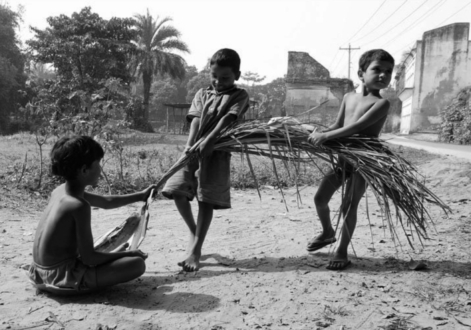
Shahnaz Parvin has captured this fleeting intersection in her work titled An Ancient Play in an Ancient City. The stones remain, but the moment is already gone. Does the past ever truly leave us, or are we just passing through its shadows?