The Architecture of Inheritance
Public transit is perhaps the most honest laboratory of human geography. Within the confines of a moving carriage, the rigid hierarchies of the city are momentarily suspended, replaced by a temporary, shared intimacy. We are all in transit, occupying a space that belongs to no one and everyone simultaneously. Yet, look closer at how we inhabit these vessels. We carry our domestic worlds with us—the questions, the patience, the quiet transmission of values from one generation to the next. The city is often criticized for its cold, mechanical indifference, but it is in these interstitial spaces that the real work of society happens. It is where the next generation learns how to navigate the world, not through grand institutions, but through the soft, persistent dialogue of a parent and child. We build cities of steel and glass, but we live in the stories we tell each other while waiting to arrive. If the city is a document of our collective life, what are we teaching those who will inherit the streets we walk today?
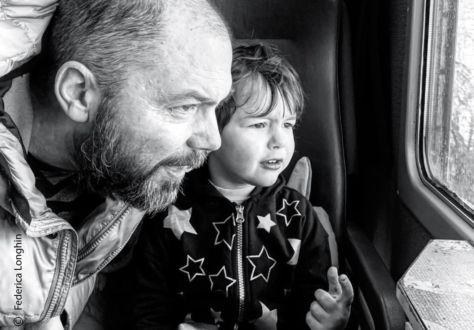
Federica Longhin has captured this beautifully in her image titled “Yes, But Why Dad?”. She reminds us that even in the transient, anonymous spaces of our urban infrastructure, the most profound human connections are being forged. Who are we inviting into the conversation of our city?