The Rhythm of Transit
I keep a small, rusted skeleton key in a velvet pouch, though I have long since forgotten which door it once opened. It is heavy for its size, cold to the touch, and carries the weight of a threshold I can no longer cross. We spend our lives moving through spaces that eventually discard us, passing through corridors and stations that hold our echoes for a heartbeat before folding them into the silence of the city. There is a strange, quiet ache in the act of transit—the way we surrender ourselves to the momentum of a machine, trusting it to carry us toward a destination that is always shifting. We are merely passengers in our own histories, watching the blur of the world through glass, tethered to the tracks of our daily routines. We leave behind pieces of ourselves in every terminal, scattering our presence like dust on a platform. If we stopped moving, would we finally recognize the places we have been, or would we simply become part of the architecture we once hurried past?
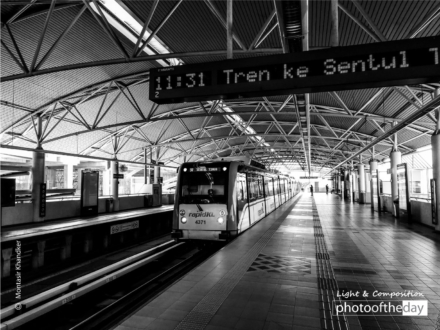
Montasir Khandker has captured this sense of fleeting movement in his work titled Tren ke Sentul Timur. It reminds me that even in the most mechanical of journeys, there is a lingering grace to be found in the transit. Does this image stir a memory of a place you have left behind?