The Weight of Memory
Monuments are rarely built for the dead; they are built for the living, to anchor a specific version of history into the physical fabric of the city. We carve stone and pour concrete to dictate how a society should remember, or perhaps, what it should be forced to forget. These structures act as silent sentinels, imposing their geometry upon the skyline, demanding a pause in the frantic pace of urban life. Yet, there is always a tension between the architect’s intent and the way a city actually breathes around these monoliths. Does the space invite the citizen to reflect, or does it merely remind them of their own smallness against the state? When we walk in the shadow of such massive, deliberate forms, we are participating in a performance of collective memory, whether we choose to or not. The city is a text written in steel and shadow, but who holds the pen, and who is left to read the footnotes of the people who live in the margins?
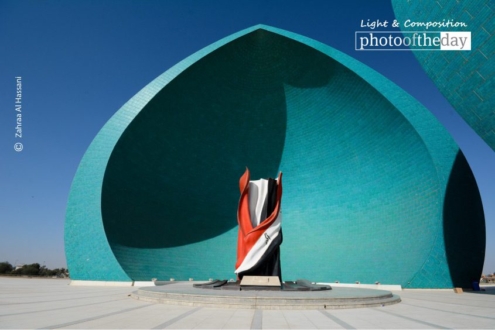
Zahraa Al Hassani has captured this tension in her striking image titled Al-Shaheed Monument. She invites us to consider how these monumental forms define our public spaces and our private grief. How does a city balance the weight of its past with the needs of those living in its present?