The Architecture of Transit
We often treat the city as a series of destinations—points on a map connected by the shortest possible distance. In this rush, we overlook the connective tissue of our environment: the stairwells, the corridors, and the thresholds that facilitate our movement. These spaces are rarely designed for lingering; they are functional conduits, built to move bodies from one state of being to another with maximum efficiency. Yet, when we choose the path of friction over the path of convenience, we encounter the hidden geometry of our daily lives. These structures reveal the intentions of those who built them, often prioritizing a cold, repetitive rhythm over the messy, unpredictable nature of human interaction. We are funneled through these spirals and landings, directed by handrails and steps that dictate our pace and posture. It is a silent, physical instruction on how to inhabit the city. When we move through these veins of concrete and steel, are we merely following a pre-ordained route, or are we reclaiming the space for ourselves?
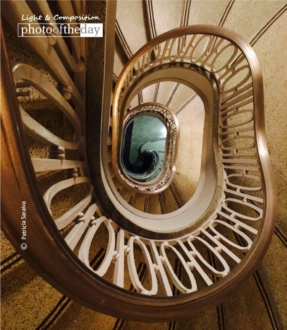
Patricia Saraiva has captured this sense of hidden transit in her image titled Stairs. By choosing the climb over the lift, she reveals the rhythmic geometry that usually goes unnoticed in our hurried urban lives. Does the architecture of your city invite you to pause, or does it simply demand that you keep moving?