The Architecture of Authority
Cities are rarely built for the people who walk them; they are built for the institutions that own them. When we look at the canyon-like streets of a financial district, we are not looking at a neighborhood, but at a monument to capital. These structures are designed to make the individual feel small, to impose a sense of permanence and gravity that discourages lingering. They are spaces of transit, not habitation. The stone and steel are meant to signal that this ground is reserved for the serious, the powerful, and the profitable. Yet, if you look closely at the cracks in the pavement or the way the light hits a doorway, you can see the friction between this rigid, top-down design and the messy, unpredictable reality of human movement. Who is permitted to stand still here, and who is expected to keep moving? The city is a document of power, but it is also a record of who is excluded from the ledger.
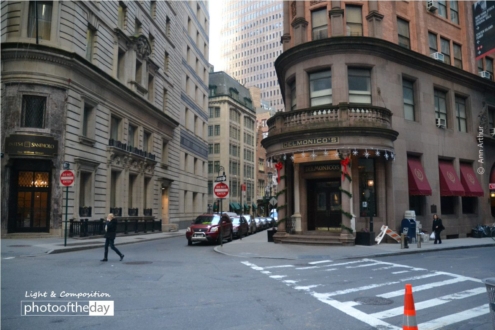
Ann Arthur has captured this tension in her image titled Where Money Never Sleeps. She highlights the imposing weight of the financial district, forcing us to consider the human cost of such grand, unyielding environments. Does this space feel like a place for people, or merely a stage for the movement of wealth?