The Geometry of Belonging
We often mistake the city for its stone and steel, forgetting that the true architecture of an urban space is found in the movement of people through it. Henri Lefebvre argued that space is not a neutral container; it is a social product, shaped by the rhythms of those who inhabit it. When we observe a silhouette cutting through a corridor of light and dark, we are witnessing a claim to territory. Who is permitted to walk here? Who is rendered anonymous by the harsh contrast of the environment? The city is a text written in shadows and concrete, and every stride taken across a public square is an act of participation in that ongoing narrative. We are constantly negotiating our visibility, moving between the spotlight of the thoroughfare and the quiet anonymity of the periphery. If the city is a document of our collective lives, what does the path of a single, solitary figure tell us about the accessibility of the spaces we build for ourselves?
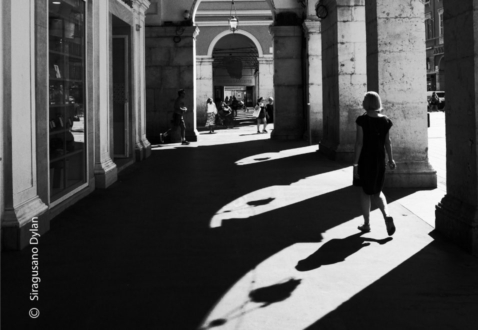
Siragusano Dylan has captured this tension in the image titled Light and Shadow. It serves as a stark reminder of how we navigate the rigid structures of our surroundings. Does this space feel like a place for people, or are the people merely guests in a design meant for someone else?