The Right to Play
Public space is rarely neutral. It is a stage where the city negotiates its values, often favoring the efficient, the productive, and the orderly. We build plazas for transit and parks for aesthetic consumption, yet we frequently forget that the most vital urban environments are those that allow for the irrational, the whimsical, and the unscripted. When a space is reclaimed for play, it challenges the rigid architecture of our daily routines. It reminds us that a city is not merely a collection of infrastructure and zoning laws, but a living organism that requires moments of collective joy to remain human. Who is permitted to occupy these spaces? Are they designed for the citizen who lingers and dreams, or only for the one who is passing through? When we see the boundaries of the expected pushed aside, we are forced to confront the sterility of our own planning. If we strip away the utility, what remains of our shared ground?
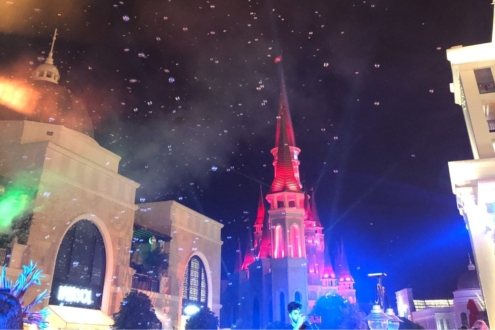
Sena Sasani has captured this spirit in the image titled Colourful Occupation of the Dreamland. It serves as a reminder that even in the most structured urban centers, spontaneous joy can reclaim the pavement. Does this scene reflect a city that belongs to everyone, or just those who know how to play?