The Architecture of Toil
We often mistake the city for its skyline, for the glass towers that signal progress and the polished facades that define our modern centers of commerce. Yet, the true city is built on a foundation of invisible labor, hidden in the peripheral zones where the ground is churned and the air is thick with the residue of production. These sites of extraction and manufacturing are the lungs of our urban existence, yet they are rarely invited into the narrative of the metropolis. We rely on the materials forged in these heat-drenched margins to construct our homes and offices, while simultaneously pushing the people who handle them to the very edge of our social geography. It is a strange paradox: the city requires the body to be present to function, but it demands that the body remain unseen to remain comfortable. When we look at the periphery, we are forced to confront the true cost of our expansion. Who is permitted to occupy the center, and who is relegated to the dust of the kiln?
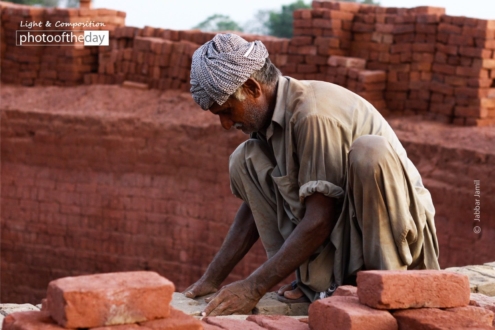
Jabbar Jamil has captured this reality in his work titled A Worker at Brick Kiln. It serves as a stark reminder of the human hands that lay the literal groundwork for our lives. Does this image change how you view the walls that surround you?