The Weight of Passing Through
In the nineteenth century, the flâneur was a figure of leisure, a man who walked the city streets with a turtle on a leash, setting his pace to the slow, deliberate rhythm of the animal. He was not going anywhere; he was simply existing within the architecture of the crowd. We have largely lost the art of the aimless stroll. Today, our movement is dictated by the efficiency of the commute, the urgency of the lunch hour, and the relentless pressure to be somewhere else. We treat the city as a corridor, a space to be traversed rather than inhabited. Yet, there is a profound history etched into the brickwork and the pavement, a silent narrative that only reveals itself when we stop moving with purpose. If we were to stand still, just for a moment, would we see the ghosts of the neighborhood, or would we simply become another ghost ourselves, passing through a world that is constantly shedding its skin? What remains of a place when the people who built its character are no longer the ones walking its streets?
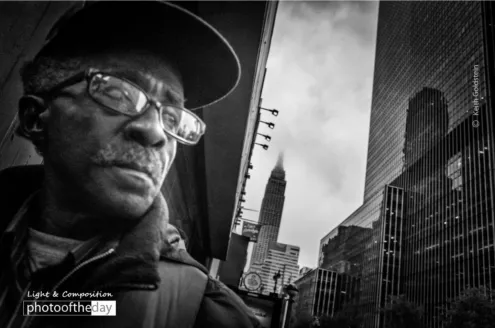
Keith Goldstein has captured this tension in his work titled Hell’s Kitchen. It is a quiet study of a person standing at the intersection of time and change. Does this figure look like they are waiting for something, or are they simply holding their ground against the tide?