The Architecture of Chance
Cities are often built on the promise of mobility, yet for many, the urban experience is defined by the stationary wait. We design our transit hubs as conduits for the busy, but they are also the primary stage for those who exist in the margins of the economy, selling hope in the form of small, printed slips of paper. These individuals are the invisible anchors of the public square. They occupy the threshold between the traveler’s destination and the reality of the street, reading the crowd for a flicker of interest or a moment of vulnerability. When we look at such a person, we are looking at the city’s true barometer of inequality. They are the ones who witness the daily migration of the workforce, yet they are rarely the ones who benefit from the city’s growth. Their presence is a quiet indictment of a system that treats survival as a game of luck. If the city is a document of our collective values, what does it say about us when we walk past the person holding the ticket to a dream we have already achieved?
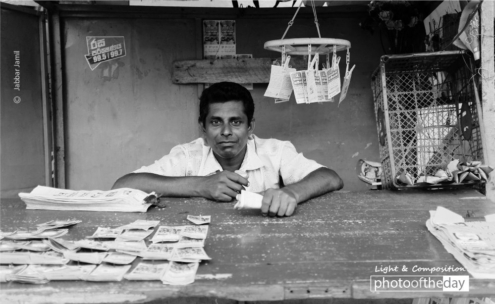
Jabbar Jamil has captured this reality in his poignant image titled The Lottery Ticket Seller. He invites us to pause at a bus station in Kandy and truly see the person behind the transaction. How often do we stop to consider the lives that sustain the rhythm of our daily commute?