The Architecture of Silence
We often mistake silence for an absence, a hollow space waiting to be filled by the noise of our own intentions. Yet, if you sit with it long enough, you realize that silence has a weight, a texture, and a geography all its own. It is not empty; it is a container. Think of the way a room feels when a conversation ends abruptly, or the heavy, expectant stillness of a library before the first page is turned. In these moments, the mind retreats, folding inward like a letter tucked into an envelope. We are rarely truly alone, even when we are solitary, because we carry the ghosts of our histories and the quiet hum of our anxieties with us. To be lost in one’s own world is not a disappearance, but a homecoming to the only place where we are truly sovereign. If we could map the interior landscapes of those who stand quietly in the crowd, what strange, beautiful cities would we find hidden behind their eyes?
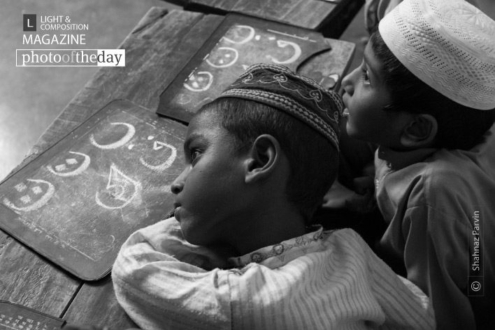
Shahnaz Parvin has captured this exact interiority in her work titled Lost in His Own World. It is a gentle reminder that even in the middle of a bustling city, a person can build a sanctuary out of nothing but a thought. Does this stillness make you feel like an intruder, or an invited guest?