The Architecture of Silence
In the middle of the nineteenth century, the gas lamp began to change the way we understood the night. Before that, darkness was a solid thing, a boundary that dictated the rhythm of our lives. But as the glow of artificial light crept into our streets, we began to treat the night as an extension of the day, a space to be conquered rather than endured. We built towers that reach toward the stars, not to touch them, but to mimic their brilliance on the ground. There is a strange, quiet ambition in this. We are a species that cannot bear to be left in the dark, so we weave webs of electricity to hold the world together when the sun retreats. It is a fragile kind of permanence, this glow that hums against the velvet sky. We stand in the center of our own creations, surrounded by the hum of a thousand lives, yet we often find ourselves searching for a stillness that the city refuses to name. What happens to the shadows when we decide they are no longer allowed to exist?
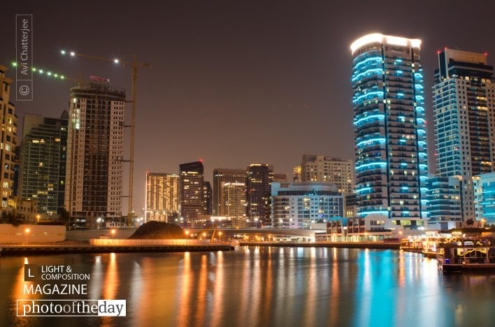
Avi Chatterjee has captured this tension in his work titled Jumeirah Beach Residence. He invites us to look at the way our own light spills across the water, turning the heavy stone of the city into something fluid and dreamlike. Does the night feel more like home when it is lit by our own hands?