The Geometry of Silence
In the nineteenth century, the French poet Baudelaire walked the streets of Paris, inventing the figure of the flâneur—the aimless observer, the man of the crowd who remains, paradoxically, entirely alone. There is a specific weight to being a stranger in a place built for transit. We are designed to move, to pass through, to arrive and depart, yet there are moments when the architecture of a city seems to conspire against our momentum. We find ourselves standing in a vast, echoing hall, surrounded by the cold lines of steel and stone, and suddenly the scale of our own existence feels fragile. It is not a sad thing, necessarily. It is simply the recognition that we are small, temporary ghosts inhabiting spaces that were meant to outlast us. We are dots on a grid, moving toward destinations that matter only to us, while the walls remain indifferent. If you were to stop moving, just for a heartbeat, would the space notice your absence, or would it simply fold back into its own perfect, empty order?
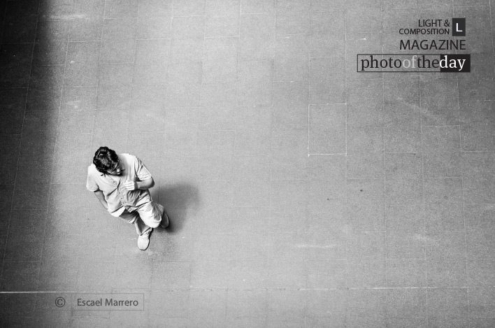
Escael Marrero has captured this exact stillness in the image titled Soledad. It is a quiet study of how we navigate the vastness of our own lives. Does the architecture hold us, or are we merely passing through its silence?