The Weight of Iron
We are taught early on that permanence is a virtue. We build monuments of stone, we carve names into oak trees, and we fasten heavy metal to bridges, convinced that if we can just anchor our intentions to the physical world, they will endure. There is a strange, quiet desperation in this. We want to believe that by locking a thought into place, we have mastered it, or perhaps that we have finally made it real. But iron rusts, wood rots, and the river beneath the bridge continues its indifferent, steady flow toward the sea. We leave these markers behind like breadcrumbs, hoping to prove we were here, that we felt something sharp and undeniable. Yet, the most profound human experiences are often those that refuse to be pinned down. They are fluid, shifting with the light and the seasons. If we could truly lock away a feeling, would it still be alive? Or would it simply become another cold, static thing, waiting for the water to rise and wash it away?
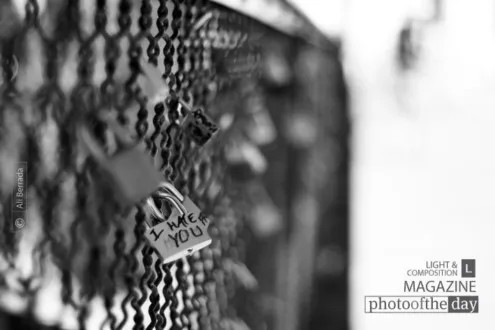
Ali Berrada has captured this tension in his work titled I Hate You. It is a striking reminder that even in places built for devotion, the human heart often speaks in contradictions. Does the weight of the lock make the feeling heavier, or does it eventually set it free?