To The Deep by Francisco Chamaca
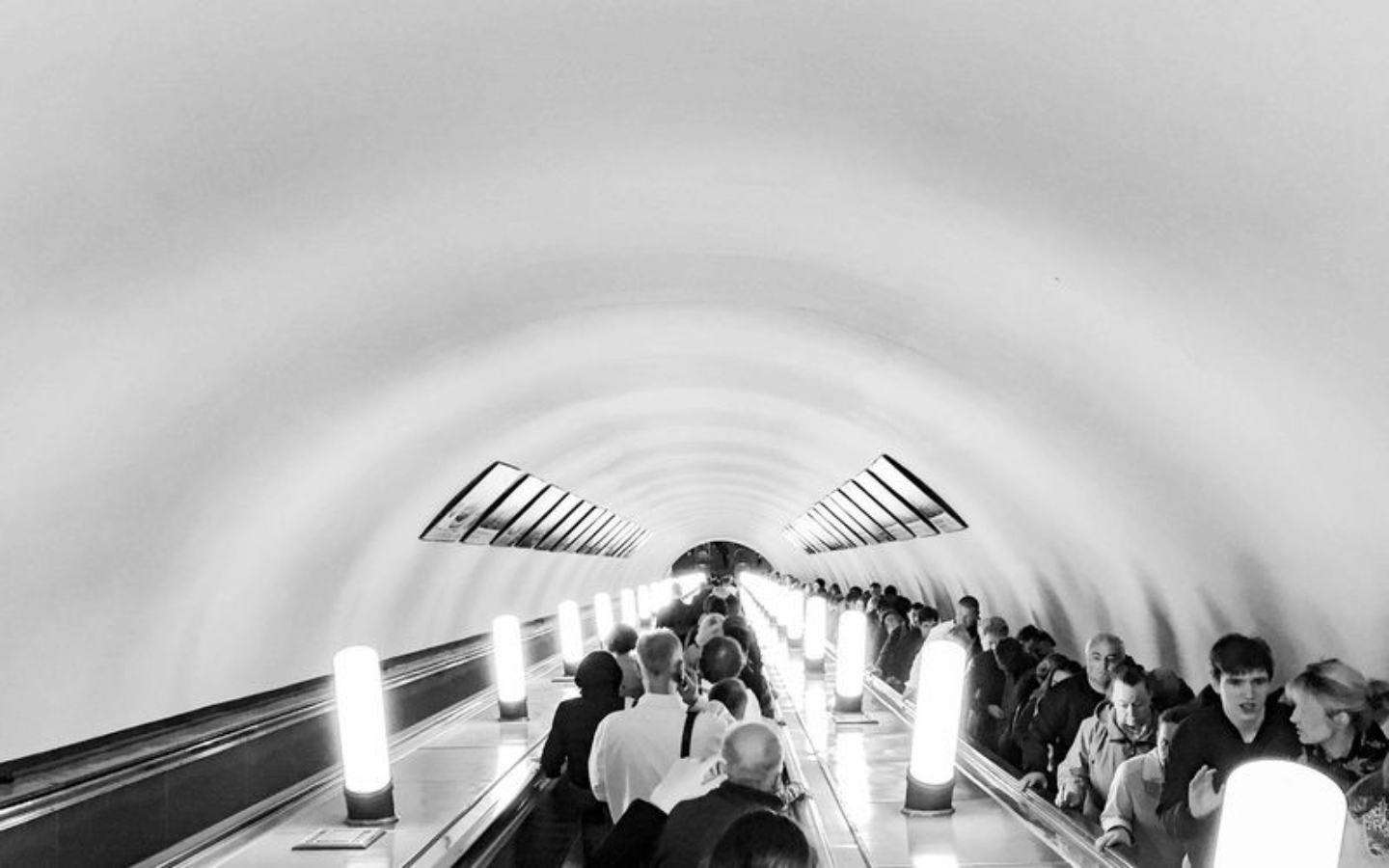
Captured within the depths of the Moscow subway, this photograph highlights one of the world's deepest transit systems. Originally constructed as anti-aircraft bunkers during wartime, these subterranean stations offer a profound architectural experience. The photographer masterfully frames the immense scale and historical weight of the space, turning a mundane transit stop into an evocative study of depth and light. The image is award-worthy for its ability to transform a utilitarian, historical structure into a compelling visual narrative, emphasizing the unique atmosphere of a site that serves as both a modern commute and a relic of the past.
Francisco Chamaca
Based in Santiago, Chile, Francisco Chamaca has cultivated a deep passion for photography over many years, transitioning into a professional practice focused on capturing the world from unique perspectives. His work primarily explores the grandeur of landscape photography, where he seeks out rare colors and remote locations, alongside street photography that highlights untraditional scenes. Committed to a path of constant learning, Chamaca strives to present familiar environments through a fresh, artistic lens.
Resonance Score Breakdown
Transparency Note: The resonance score (7.1/20) is calculated based on social engagement metrics collected before the award announcement.
Expert Photography Reviews · 7
The Weight of Descent
I have always found the idea of subterranean travel inherently suspicious. There is something performative about the way we descend into the earth, pretending that the crushing weight of the world above is not pressing down on our shoulders.
Read the reflection →The Weight of Below
I took the long way home today, mostly because the elevator in my building was broken again. Standing in the stairwell, I felt that strange, heavy silence that only exists when you are deep beneath the surface of things.
Read the reflection →Reviews & Comments
Share your thoughts about this award-winning photograph. Your reviews contribute to the community engagement score.
Most subway shots are just geometry exercises, but this one hits differently. It’s the way the light bleeds into the tunnel’s throat, turning a commute into a descent into history. I’ve seen thousands of architectural studies, yet this iPhone 6 capture feels more honest than most high-end gear. It’s the grain that gets me; it feels like a memory. Thirty years from now, people will still feel the crushing weight of that ceiling. It’s haunting.
Descending into the Moscow metro feels like a decompression stop. The way the light bleeds through those vaulted arches mimics the blue-shift I see at twenty metres, where yellow vanishes into the abyss. It’s haunting. I’ve spent my life fighting backscatter and refractive distortion, yet here, the air itself seems thick, pressurized by history. It’s a strange, subterranean beauty that makes my pulse race, reminding me that we’re all just divers in a different kind of deep.
The vaulted arches of the Moscow metro press down with a weight that feels almost geological. I’m struck by how the cold, rhythmic geometry of the station swallows the lone figure. It’s not just a commute; it’s a descent into history. The light clinging to the marble surfaces creates a lonely, cinematic tension. By placing the subject so small against this brutalist grandeur, the environment doesn’t just frame them—it defines their solitude. It’s hauntingly beautiful.
The verticality here is relentless. It’s a brutalist geometry that forces the eye into a subterranean abyss. The vanishing point doesn’t just recede; it anchors the frame with a cold, mathematical certainty. I’m genuinely unsettled by how the light clings to those concrete ribs. It’s a rare instance where the iPhone’s limitations don’t matter. The spatial tension holds because the architecture demands it. It’s a rigid, structural triumph that refuses to apologize for its own weight.
Deep beneath Moscow, we find a soul swallowed by history. Francisco Chamaca didn’t just frame a subway; he listened to the silence of those bunkers. We see a lone figure dwarfed by the weight of concrete and memory, caught in a transit between eras. It’s haunting how the light clings to them. I feel a sudden, sharp ache for the stories they’re carrying into the dark. This is a photograph that asks to be returned to.
The Moscow subway is a cavernous, lonely place, but here, the humanity feels like an afterthought. I look at this commuter and I don’t see a person who chose to be known; I see someone being used as a prop for the architecture. It’s a cold, distant frame. I’ve spent my life chasing connection, and this just doesn’t have it. It’s technically sharp, sure, but it’s missing the soul that only comes when you actually talk to someone.
The vertical axis here is a masterclass in vanishing point convergence. Chamaca’s frame relies on a strict 1:1 ratio between the illuminated escalator tracks and the dark, receding tunnel walls. It’s a perfect geometric progression. The rhythm of the repetitive light fixtures creates a vector that pulls the eye into the negative quadrant with startling force. I’m genuinely breathless at how he’s solved this spatial equation; it’s pure, cold, subterranean logic turned into art.