
Where Rivers Learn to Speak
We often mistake the edges of a map for the edges of our world. We draw lines across mountains and rivers, naming them borders, as if the earth itself recognizes the jurisdictions we impose upon it. Yet, geography has a memory that predates our fences and our settlements. It remembers the slow, patient grinding of tectonic plates and the relentless carving of water against stone. When we stand before such vast, indifferent landscapes, we are reminded that our human history is merely a thin layer of dust over a much older, more permanent narrative. We build our cities in the valleys and our outposts on the ridges, convinced of our permanence, while the landscape continues its own slow, geological migration. We are temporary guests in a space that was never designed for us, yet we act as if the horizon belongs to our gaze. If the land could speak, would it even recognize the names we have given to its most sacred confluences?
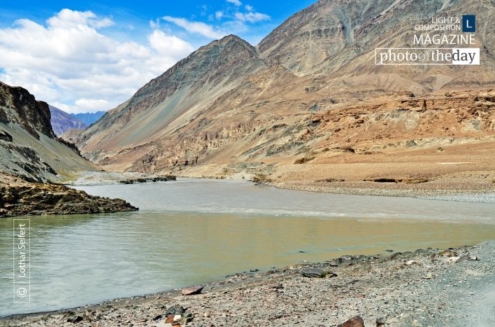
Lothar Seifert has taken this beautiful image titled Sangam Point, capturing the silent dialogue between two great rivers. It serves as a reminder of the scale of the world outside our urban grids. Does the wildness of this place make you feel smaller, or more connected to the earth?