The Weight of the Flame
In the ancient world, fire was not merely a tool for warmth or the cooking of grain; it was a conversation. To light a flame was to invite a witness into the room, a flickering presence that demanded a certain posture of the soul. We have become so accustomed to the cold, steady hum of electricity that we forget how fire behaves—how it lunges and retreats, how it casts shadows that seem to possess a memory of their own. There is a rhythmic quality to the way we tend to things that matter, a repetitive motion that eventually wears a groove into the spirit. Whether it is the turning of a page, the kneading of dough, or the raising of a hand in devotion, these small, deliberate acts are the anchors that keep us from drifting into the formless dark. We repeat the gesture not because we expect a different result, but because the repetition itself is a form of listening. What happens to the silence when it is finally filled with the weight of a thousand prayers?
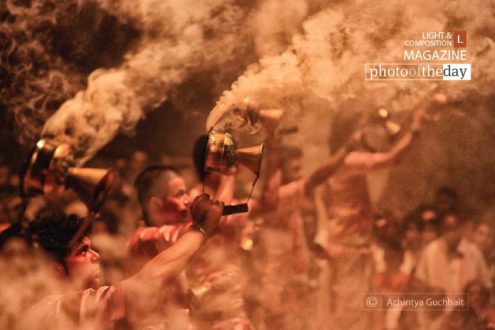
Achintya Guchhait has captured this profound sense of ritual in the image titled Evening Aarti. It serves as a reminder that even in the busiest of currents, there is a space held for the sacred. Does the light change the darkness, or does the darkness simply make the light more necessary?