The Weight of Stone
In the middle of the nineteenth century, a geologist might have spent a lifetime studying the slow, rhythmic accumulation of sediment, watching how time presses down on the earth until it becomes something unyielding. We often mistake stone for a static thing, a silent witness that simply waits for the world to pass it by. Yet, stone is a record of pressure. It is the physical manifestation of patience, a stubborn refusal to be hurried by the fleeting nature of the seasons or the frantic pace of those who walk beneath its eaves. We build our cathedrals and our monuments as if to anchor ourselves to the ground, hoping that by stacking heavy, carved blocks toward the sky, we might borrow some of that geological permanence. But even the most towering structure is merely a conversation between the earth and the air. We stand in the shadow of these giants, feeling small, yet we are the ones who give the stone its meaning. If the walls could speak, would they tell us of the centuries, or would they simply ask why we are always in such a hurry to leave?
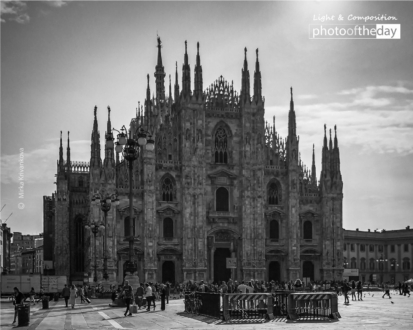
Mirka Krivankova has captured this quiet dialogue in her image titled Piazza Duomo Milano. It reminds me that even the most solid foundations are held together by the way we choose to look at them. Does the stone feel lighter when it is finally seen?