The Weight of Passing Time
We move through cities like ghosts, leaving only the faintest trace of our passage. The stone remains, indifferent to the hurry of the living. We believe we are the ones who observe, yet we are merely the blur in the periphery of something much older and more permanent. There is a specific loneliness in being a witness to a place that does not know your name. It is the same feeling as standing on a frozen lake at dusk, watching the ice shift beneath the surface. You are there, and then you are gone, and the architecture of the world does not shift to accommodate your absence. We try to hold onto the motion, to capture the streak of light before it vanishes into the dark, but the dark is patient. It has seen thousands of us pass by, all of us rushing toward a destination that is already behind us. What remains when the movement stops?
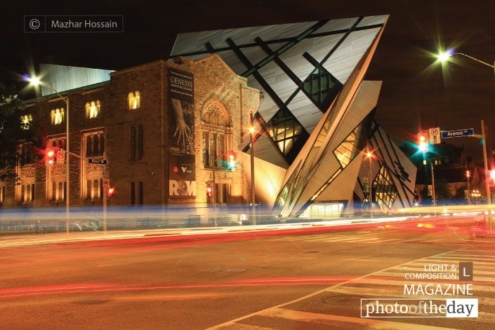
Mazhar Hossain has captured this stillness in his work titled Royal Ontario Museum. It is a study of how we inhabit the spaces we build. Does the city feel different to you when you stop to watch it move?