The Weight of Dust
There is a specific silence that lives in the places where things are made by hand. It is not the absence of sound, but the absence of rest. I remember the way my grandfather’s workshop smelled of cedar and old sweat, a space defined by the tools he left behind, their handles worn smooth by the exact shape of his palm. When he died, the tools remained, but the rhythm of the work vanished, leaving behind a hollow that felt heavier than the objects themselves. We often mistake the object for the labor, but the labor is a ghost that haunts the material long after the hands have moved on. We see the brick, the wood, the iron, but we rarely see the life that was traded to bring them into being. What happens to the energy spent in the heat, the hours that were burned away to build a wall or a house? Does it simply dissipate into the air, or does it settle into the dust, waiting for someone to notice the cost of what we stand upon?
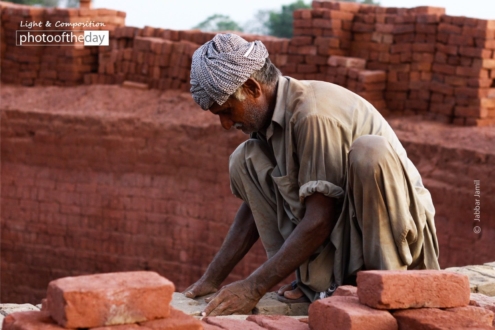
Jabbar Jamil has captured this quiet, heavy truth in his image titled A Worker at Brick Kiln. He invites us to look past the industry and into the singular life that sustains it. Can you feel the weight of the hours held within this frame?