The Architecture of Distraction
In the nineteenth century, the invention of the streetlamp was heralded as the final conquest of the night. We were told that by banishing the shadows, we would finally see the world as it truly was, stripped of the terrors that hide in the dark. Yet, something curious happened when we flooded our streets with artificial brilliance. We stopped seeing the road and began to see only the light itself. We became enamored with the glow, the way a simple bulb could fracture into a thousand soft, shimmering ghosts when viewed through a tired eye or a rain-slicked window. It is a strange human impulse to prefer the blur to the clarity. We find comfort in the diffusion, in the way a harsh, mechanical reality is softened into something dreamlike and unreachable. Perhaps we are not looking for the truth of the street at all, but rather for a way to make the mundane world feel like a memory we haven’t quite lived yet. What happens to our sense of place when we choose to look at the glow instead of the ground?
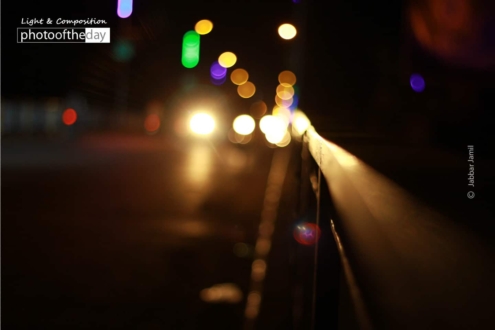
Jabbar Jamil has captured this exact feeling of luminous suspension in his photograph titled Bokehlicious. He has turned the ordinary transit of a city night into a constellation of soft, floating embers. Does this view make the city feel more like home, or more like a dream?