The Right to Play
Henri Lefebvre argued that the city is not merely a collection of buildings, but a social product—a space that we collectively produce through our presence and our actions. In our modern, hyper-regulated urban environments, we often see public spaces treated as transit zones or aesthetic backdrops, strictly managed for efficiency. Yet, there is a radical act in reclaiming these spaces for pure, unproductive leisure. When people gather to play, they temporarily suspend the city’s demand for productivity. They transform a patch of ground into a theater of human connection, asserting that the city belongs to those who inhabit it, not just those who own or design it. This reclamation is a quiet rebellion against the sterile, top-down planning that seeks to dictate how we move and interact. It reminds us that the most vital parts of our urban geography are not the monuments or the infrastructure, but the fleeting, joyful moments where strangers and friends alike carve out a territory of their own. If the city is a document of our social lives, what does it say when we are forced to fight for the right to simply exist together in the open air?
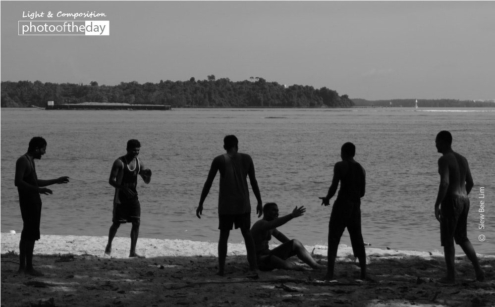
Siew Bee Lim has captured this spirit in the image titled Playing a Game. It serves as a reminder of how we can momentarily reshape our urban environment through simple, shared joy. Does this scene reflect a city that truly welcomes everyone to occupy its spaces?