The Memory of Fire
Geologists often speak of the earth as a living, breathing entity, though its breath is measured in eons rather than seconds. We walk upon the cooling crust of ancient violence, forgetting that the ground beneath our feet was once fluid, molten, and terrifyingly alive. There is a strange comfort in the blackness of volcanic stone; it is the color of an ending, yet it serves as the foundation for everything that follows. Moss finds a foothold in the smallest of fissures, a slow, green reclamation that defies the harshness of the cooling rock. It is a quiet negotiation between the heat of the past and the persistence of the present. We are all, in a sense, living on the remnants of old fires, waiting for the softest things to take root in the places where the world once burned. If the earth can find a way to soften its own jagged edges over time, what does that suggest about the scars we carry? Is it possible that our own hardness is merely a precursor to a different kind of growth?
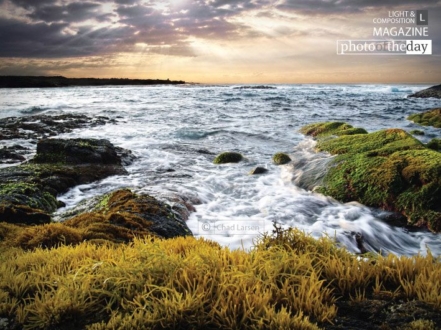
Chad Larsen has captured this quiet persistence in his image titled Punalu’u. It serves as a reminder that even the most desolate landscapes are merely waiting for the right moment to bloom. Does the darkness of the earth make the life upon it feel more fragile to you?